Shower Leaking Through the Ceiling: Finding the Real Source
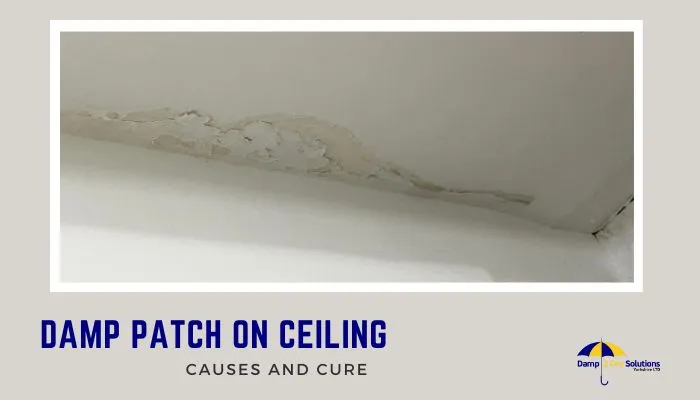
The stain on the ceiling is where water gave up travelling, not where it started. Here is how a shower leak is narrowed from six candidates to one, which tests actually isolate a source, and where each of those tests will mislead you.
A shower is six possible leaks, not one
People describe this as a shower leak, which is accurate and unhelpful. A shower enclosure contains at least six independent things that can let water past, and they behave so differently that identifying which one you have is most of the work. Replacing the silicone because the ceiling below is wet is a coin toss dressed up as a repair.
| Source | Typical signature below | When it appears |
|---|---|---|
| Hot or cold supply pipe to the mixer | Continuous damp, often growing when nobody is using the bathroom | All the time, independent of use |
| Waste pipe or trap from the tray | Water arriving during and just after a shower, then stopping | Only while draining |
| Tray or shower base seal | Damp at one edge below, worsening slowly over months | During use, often only when someone stands in a particular spot |
| Failed waterproofing behind tiles | A wide, diffuse damp area rather than a drip | Gradually, after long use, worse with heavy showering |
| Grout, silicone or a failed junction | Damp local to one wall, often with tiles sounding hollow | During use, and it gets worse as the defect opens up |
| Enclosure door or screen seal | Water escaping onto the bathroom floor first, then through the floor | During use, with a wet bathroom floor as the tell |
Two of those are pressurised and four are not, and that distinction is the fastest way to cut the list in half.
Waste or supply: the question that halves the problem
A supply leak is under mains or stored pressure continuously. It does not care whether anyone is in the shower. If the ceiling below is wet on a Tuesday afternoon when the bathroom has not been used since Sunday, you are looking at a supply pipe or a fitting on one, and the shower is largely a coincidence of location.
Everything else is use driven. Waste, tray, tiling and enclosure faults only leak while water is being applied or drained, which is why they are so much harder to catch and so much more often misdiagnosed. They also stop on their own, which convinces people the problem has resolved.
The test that separates them costs nothing. Do not use the bathroom for twenty four hours, having dried the area below thoroughly and left a sheet of kitchen paper on the affected spot. Paper that is wet in the morning with the shower unused points at supply. Paper that is dry until somebody showers points at everything else. If the supply side is implicated, a meter check confirms it, and our guide to reading your water meter covers how to run that test so the result means something.
Trays, seals and why silicone is not waterproofing
The most common misunderstanding in a bathroom is the belief that the tiles and the sealant keep water out. They do not, and they were never intended to.
Grout and silicone are maintenance items
Cementitious grout is porous. It slows water down, it does not stop it. Silicone is a flexible joint sealant that accommodates movement between two materials, and it has a service life measured in years rather than decades. Both are consumables. A shower that relies on them as its only defence is a shower that will leak, and the only question is when.
This is why resealing so often appears to work and then does not. Fresh silicone genuinely reduces the flow for a while, so the ceiling dries and everyone relaxes. If the actual defect is behind the tiles, the water simply resumes its previous route once the new seal ages or the underlying movement reopens it. A leak that returns a few months after a reseal is telling you the reseal was treating a symptom.
What should be behind the tiles
In a properly built wet area, waterproofing is a continuous layer applied to the substrate before tiling: a tanking membrane or liquid applied system, dressed into the tray or floor and sealed at every junction and penetration. BS 5385, the standard covering wall and floor tiling, deals with tiling in wet conditions and with the preparation that has to sit underneath it. The tiles are then a wearing surface and a decorative finish, and the waterproofing is the thing actually doing the job.
A great many London bathrooms, particularly in older conversions and quick refits, have tiles applied directly to plasterboard with no tanking at all. Those installations work while the grout and silicone hold, and they fail comprehensively when the grout and silicone stop holding, because there is nothing behind them. Once water reaches plasterboard it spreads, softens it, and arrives at the ceiling below across a wide area rather than at a point. That diffuse pattern is characteristic and is one of the more reliable indications that the problem is the waterproofing rather than a pipe.
What the ceiling below is telling you, and where it lies
The stain is where water stopped travelling, not where it started. Between the shower and the visible mark sits a floor void containing joists, pipe runs, cabling and often insulation, and water follows that geometry rather than gravity alone.
Water lands on the back of the floor deck, runs along a joist until it meets a notch, a bolt, a pipe or a cable, and drips there. In a joisted floor this can move a leak several metres in the direction of the joist run, and almost never across it. That is a useful constraint: if the joists in the ceiling below run north to south, the source is very likely north or south of the stain rather than east or west of it.
The other common displacement is the downlighter. A bathroom or a kitchen ceiling full of recessed lights presents a series of holes, and water travelling along the void will find the nearest one and come out of it. A leak emerging from a light fitting tells you almost nothing about position and quite a lot about hazard, because it means water has reached the electrical installation. That is the point at which the circuit gets isolated and stays isolated, as set out in our notes on water leaks and electrical safety.
If the ceiling itself is sagging, bulging or holding weight, the priority changes entirely and stops being a plumbing question, which is covered in what to do when water comes through a ceiling.
Tests that narrow it before anything is opened
The principle is to apply water to one candidate at a time, with the ceiling below observed, and to leave enough time between tests for a result to mean something. Rushing this produces a false negative and an unnecessary hole.
| Test | What it isolates | What a positive result means |
|---|---|---|
| Twenty four hours of no use, area dried | Pressurised supply against everything else | Damp with no use means a supply pipe or fitting |
| Fill the tray with the waste plugged, leave standing | The tray, its seal and the junction with the wall | Water below with nothing draining points at the tray or its seal |
| Release that standing water and watch | The waste, trap and its connections | Water below only as it drains points at the waste run |
| Spray the walls only, tray covered and draining | Tiling, grout, junctions and waterproofing | Water below from wall spray alone points behind the tiles |
| Spray the screen and door seals, floor kept dry | The enclosure itself | Water escaping onto the bathroom floor points at the enclosure |
| Run the mixer with the shower head removed and diverted to waste | Supply pipework under pressure and flow | Damp appearing under flow but not when static suggests a joint opening under pressure |
Run one per session, dry everything between, and record what you did and what happened with the time. Two days of that, done properly, will usually reduce six candidates to one or two and is worth more than an hour of guessing.
How to run them so the result is worth having
Sequence and discipline matter more than equipment here, and most failed home testing fails on one of these points rather than on technique.
- One variable per session. Testing the tray and the walls together tells you only that the bathroom leaks, which you already knew.
- Dry completely between tests. Residual moisture from the previous attempt reads as a positive for the next one.
- Give each test hours, not minutes. A slow route through a floor void can take most of a day to reach the ceiling below, so a result at ten minutes is meaningless.
- Use realistic volumes. A household shower delivers far more water over far longer than a brief spray with a shower head, and small defects only open up under sustained load.
- Write it down. What was tested, for how long, and what appeared below and when. Memory reorganises this within a day.
- Mark the stain edge in pencil and date it. That is the only reliable way to know whether it is still growing.
Where these tests mislead, and why a negative proves little
Every one of the above has a failure mode, and knowing them prevents the confident wrong conclusion.
| Method | What it genuinely establishes | Where it goes wrong |
|---|---|---|
| Standing water in the tray | Whether the tray holds water | Standing water loads the tray differently from someone standing in it. A tray that flexes under weight can pass this test and still leak in use |
| Wall spray testing | Whether the wall surface passes water | Volume and duration matter. Two minutes of spray does not reproduce a household's daily showering, and a slow route can take hours to show below |
| Thermal imaging | Temperature differences on a surface, so a hot water route shows well | It reads temperature, not moisture. A cold supply leak barely registers, and a stain that is already saturated and evaporating can read cold for the wrong reason |
| Moisture meters on the ceiling | A relative comparison across the surface | They read conductivity, so foil backed plasterboard, salts and metal fixings all produce misleading highs. A number alone is not a diagnosis |
| Acoustic detection | A pressurised pipe that is making noise | Useless on a waste pipe, a tray or a tiled wall, because none of those are under pressure. It answers one of the six candidates |
| Resealing and waiting | Whether a surface joint was contributing | It temporarily reduces almost any wet area leak, so a short period of improvement does not confirm the cause |
The broader point is that a negative result rarely clears a candidate. It usually means the test did not reproduce the conditions that cause the leak. Shower faults are frequently intermittent, load dependent and slow, and a test that produces nothing in ten minutes has not proved the shower is sound. Where the pattern is that stubborn, bathroom and shower leak detection combines several methods with a controlled water load rather than relying on any one of them.
Opening up, flats, and who pays for what
At some point the void has to be seen. The decision worth making carefully is where, because the right opening confirms a diagnosis and the wrong one is damage for nothing.
- Open where the evidence points, not where the stain is. Follow the joist direction and open uphill of the mark.
- Prefer the ceiling below to the bathroom floor where the bathroom is tiled. A ceiling is plasterboard and paint. A tiled floor is a bed, a screed, possibly a heating loop, and tiles that no longer match.
- Isolate lighting circuits first if there are downlighters anywhere near the work.
- Beware textured ceiling coatings in buildings predating 2000. These can contain asbestos, and disturbing them is controlled work. If in doubt, stop and have the material checked.
- Photograph the void before anything is closed. That photograph is the evidence an insurer or a freeholder will ask for later.
In a flat, the ceiling is usually not yours
Where the shower is upstairs and the ceiling is downstairs, the ceiling normally forms part of the lower flat's demise, and it cannot be opened without that leaseholder's agreement, often with the managing agent involved as well. That is not a technicality to be brushed aside for speed. It also determines liability, which turns on the lease and on whether anyone was negligent rather than on who is inconvenienced, and who pays when the leak is from the flat above sets out how that usually resolves.
On cost, the variables are access, whether the bathroom is tiled, whether the waterproofing has to be renewed rather than patched, and whether reinstatement of the ceiling is included or handled separately. A repair to a waste joint and a re-tank of a whole wet area are not the same job in any sense. We confirm what is being charged before anyone travels, and reinstatement is always quoted separately from detection and repair, because insurers process those as distinct line items. The likely scale of the making good is covered in repairing ceiling water damage.
How we help with this
If the article describes a problem you actually have, these are the visits that deal with it.
- water coming through a ceiling
What to do first when it is coming through from above.
- damp and moisture surveys
Moisture mapping that separates a leak from condensation or damp.
- leak detection in London
Finding a hidden leak without opening the property up first.
Frequently asked questions
Why is my ceiling wet below the shower when the shower is not being used?
Because that pattern points at a pressurised supply pipe rather than at the shower itself. Waste pipes, trays, tiling and enclosures only leak while water is being applied or drained. A supply pipe is under pressure continuously and does not care whether anyone is in the bathroom. Dry the area, leave kitchen paper on the spot, avoid using the room for twenty four hours, and check the paper. Wet paper with no use effectively confirms the supply side.
Will resealing the shower stop the leak?
Only if the sealant was genuinely the source, which is less often than people hope. Silicone is a flexible joint sealant with a service life of a few years, and grout is porous rather than waterproof. Neither is the waterproofing layer in a correctly built wet area. Resealing usually reduces any wet area leak for a while, so temporary improvement does not confirm the cause. A leak that returns a few months after a reseal is telling you the real defect sits behind the tiles.
Why is the stain not directly under the shower?
Because water travels along the structure before it drips. It lands on the back of the floor deck, runs along a joist until it meets a notch, a bolt, a pipe or a cable, and comes out there. That can move the visible mark several metres along the joist run, though rarely across it. Recessed downlighters make it worse, since water in a ceiling void will find the nearest hole. The stain tells you where water stopped, not where it started.
Can thermal imaging find a shower leak?
It helps on some of the six candidates and not on others. A thermal camera reads surface temperature, so a hot water supply route or a recent discharge of warm waste water shows up well. A cold supply leak barely registers, and an area that is already saturated and evaporating can read cold for reasons unrelated to the source. It is one input among several, and a bathroom leak is normally settled by controlled water testing rather than by a camera alone.
Should I open the ceiling below or the bathroom floor?
Usually the ceiling, where the bathroom is tiled. A ceiling is plasterboard and paint and is straightforward to reinstate. A tiled bathroom floor is a tile bed, possibly a screed, possibly an underfloor heating loop, and replacement tiles that will not match. Open uphill of the stain following the joist direction rather than directly at the mark. Isolate any lighting circuits first, and have textured coatings in pre-2000 buildings checked before disturbing them.
Who pays when a shower leaks into the flat below?
It depends on the lease and on whether anyone was negligent, not on who is most inconvenienced. The ceiling normally forms part of the lower flat's demise, so it cannot be opened without that leaseholder's agreement and often the managing agent's. Many buildings policies treat escape of water as an insured peril with a trace and access extension for finding it. Notify the insurer and the managing agent early, and keep detection, repair and reinstatement as separate invoice lines.