Emergency Leak Response
Water Leak Repair London
How much a water leak costs you is mostly decided in the first hour, before any repair happens. A pipe that runs for forty minutes while someone hunts for the stop tap does more damage to a London flat than the split itself ever would.
How a leak repair visit is priced
| Job | How it is charged | Time |
|---|---|---|
| Attendance and stopping the water | Rate for the time band, agreed before travel | First thing on arrival |
| Repair to a pipe the engineer can reach | Quoted before the work starts | Often the same visit |
| A hold-it-till-morning clamp or wrap | Quoted as temporary, and described as such | Minutes |
| Getting at a pipe under floor or behind plaster | Quoted once it is clear what has to come up | Better in daylight |
| Making the surface good afterwards | A separate job with a separate quote | Arranged later |
How each stage is charged, not a quote. The detection fee is fixed and agreed on the call, before an engineer travels.
So the call starts there. Before an engineer is dispatched we work out with you whether the supply can be shut off from inside the property, whether an isolation valve closer to the leak will do it without killing the whole flat, and whether anything electrical sits in the path of the water. That conversation is free and it happens immediately, at any hour.
On site the order is fixed: stop it, contain it, then find out what actually failed. Only when the water has stopped travelling does the diagnosis start, because chasing a source while a pipe is still pouring is how ceilings come down.
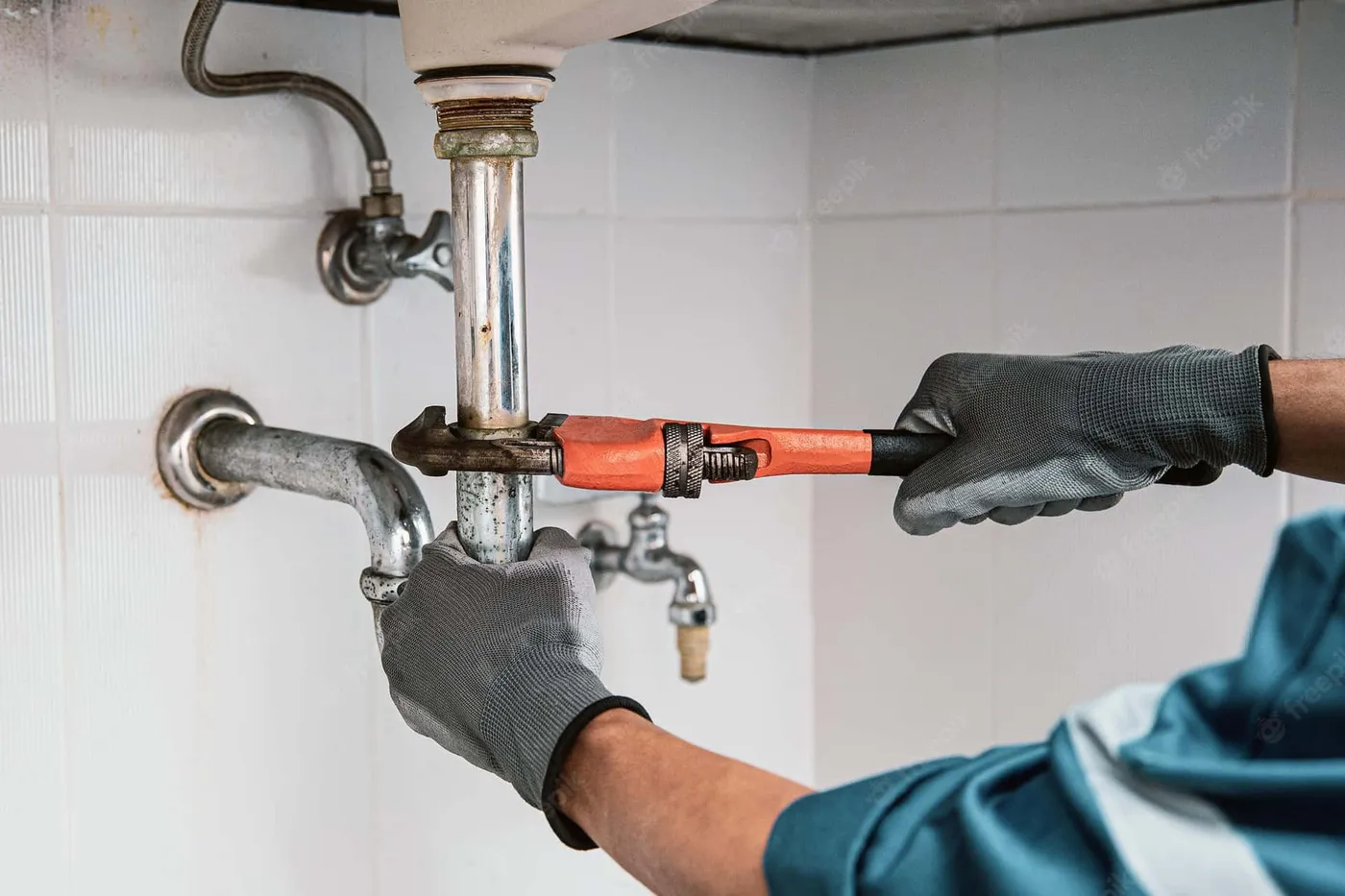
Our engineers are qualified plumbers carrying pipe, fittings and couplings, so a leak that is reachable is repaired on the same visit rather than made safe and revisited. Where the failure sits under screed, behind tiling or under a drive, the visit ends with the water stopped and the fault located, and the opening-up is booked for daylight when it can be done properly and more cheaply.
We work across all 33 boroughs at every hour, in converted terraces, mansion blocks, estates and new-build towers. Tell us what the water is doing and we will tell you honestly whether this needs a van tonight or a slot in the morning.
Our pricing is transparent and based on the specific repair required. You will receive a clear quote for the permanent fix once the emergency leak has been contained and diagnosed.
What you get
- 24/7 emergency call-out with rapid dispatch across all London zones.
- First-response team equipped to immediately isolate and stop active water leaks.
- Permanent repair solutions implemented on-site after emergency containment.
- Experienced with all London property types: terraced houses, flats, conversions.
- Diagnosis and repair of leaks from pipes, joints, valves, tanks, and appliances.
- Clear communication throughout, explaining the leak source and repair action taken.
How it works
A method, not a guess
01
Triage on the phone
Running, dripping or already stopped. That single answer decides whether this is a now job, and it is asked before anything is quoted or dispatched.
02
Water off before we arrive
We talk you to the stop tap or the nearest isolation valve while an engineer is travelling. Every minute the supply is off is damage that never happens.
03
Contain, then diagnose
On arrival the engineer secures the supply, catches and redirects what is still moving, and only then traces what failed and why.
04
Repair now or book for daylight
Reachable pipework is repaired on the visit with parts from the van. Anything needing floors up or a drive opened is quoted and scheduled, with the water safely off in the meantime.
Six things to know before you book water leak repair in London
The first hour costs more than the repair does
A repair to a split pipe is a small job. The floor, the ceiling below, the plaster and the drying are not. Almost all of that cost is decided by how long water moved before someone shut the supply, which is why any firm worth calling spends the start of the call on your stop tap rather than on your postcode. If the person answering the phone takes your address and payment details before telling you how to stop the water, you are talking to a booking service, not a plumber.
Know where your stopcock is before you ever need it
Standing in the dark hunting for a stop tap is the single most expensive five minutes in domestic plumbing. In most London homes it sits under the kitchen sink; in converted flats it is often in a hall cupboard, behind a bath panel or inside the airing cupboard, and in purpose-built blocks it can be on the shared riser just outside your front door. Find yours this week, turn it a quarter turn to check it is not seized, and tell everyone in the property where it is. Seized stopcocks are common in older London stock and are worth replacing before an emergency proves it.
Ask what the visit is expected to achieve, not just when it will arrive
Two firms can both say they will come tonight and mean completely different things. One means an engineer who will stop the water, locate the fault and repair it if the pipe is reachable. The other means someone who will look, cap it off and book a second chargeable visit for the actual work. Ask directly: will the engineer arrive with pipe, fittings and the tools to cut and joint, and can they complete an accessible repair on the visit? A yes changes the value of the call-out fee entirely.
Beware the quote that only exists after the engineer is standing in your hallway
The out-of-hours version of an unpleasant surprise is a firm that will not put a figure on the visit until someone is already on your doorstep, when you are wet, tired and in no position to negotiate. Get the visit type and the applicable rate stated before anyone travels, and get it in a message if you can. Checkatrade publishes UK leak detection at an average of £162, with most jobs falling between £115 and £234, a full recorded spread of £80 to £1,600 and hourly diagnostic rates of £95 to £145. Those figures are a useful sanity check on anything quoted to you at 2am.
A clamp is not a repair, and you should be told which one you got
Self-amalgamating tape, slip couplings, repair clamps and liquid sealer are get-you-to-morning measures. A permanent repair means the damaged section is cut out, new pipe and joints fitted, and the circuit pressure tested before anything is closed up. Both are legitimate at 3am, but you are entitled to know which one is behind your wall. If the paperwork says the leak was sealed rather than the section replaced, ask what is still outstanding, because patched pipe tends to fail again behind freshly decorated plaster.
Decide what genuinely has to happen tonight
Once the supply is off and nothing is spreading, the emergency is over and you are into a scheduling decision. Lifting screed, cutting into tiling, excavating a drive or anything needing a neighbour or managing agent to grant access is better and usually cheaper done in daylight. Work out whether you can isolate just the affected branch and keep the rest of the property in water overnight. If you can, a booked morning repair beats paying a night rate to finish a job that is already stable.
Compare like for like
Coming tonight can mean two very different visits
Two firms can both promise to attend this evening and deliver completely different things. One sends an engineer with pipe, fittings and the tools to cut and joint, who leaves the leak repaired. The other sends someone to look at it, cap it off and book the actual work for another day at another charge. Both are honestly described as coming out tonight. Only one of them ends the problem.
| What to check | A look-and-rebook visit | A firm that quotes on the doorstep | How we run the call |
|---|---|---|---|
| What the van carries | Diagnostic kit and a quote pad. The repair is a separate mobilisation. | Varies by whoever is sent, and is not established beforehand. | Pipe, fittings and jointing tools as standard, so a reachable leak can be finished on the visit you are already paying for. |
| Number of visits | Two as a matter of course, with an attendance charge on each. | One or two, decided once they are in your hallway. | One wherever the pipe can be reached. We will tell you honestly on the phone if yours is likely to need two. |
| When you find out the price | After the inspection, which is also after the first fee is committed. | On your doorstep, at the worst possible moment to be negotiating. | Before anyone travels. The attendance band is agreed on the call and the repair is quoted before work starts. |
| Temporary fixes | Applied and described as sorted, which is how patched pipe ends up behind new plaster. | Used as the lead-in to a larger quote. | A clamp at 3am is often the right call. It is described as temporary, and what remains outstanding is written down. |
| Behind plaster or under boards | Requires a separate detection appointment before anything can proceed. | Opened up on a guess, so the wrong area is frequently cut. | Located first, then opened at one point. The detection and the repair sit in the same visit. |
| What happens to the surface | Left open for someone else to deal with. | Patched roughly and called making good. | Made safe and clean, with proper plaster or tiling quoted as the separate trade it actually is. |
| Whether it needed tonight at all | Never discussed. The attendance is the product. | Not raised once the visit is booked. | If you can isolate the branch and keep water elsewhere, a booked morning repair beats a night rate. We will tell you when that applies. |
From the forums
The questions that come up when a leak starts
London homeowners compare notes candidly on public discussion, consumer-rights discussions and UK trade public discussion, and the same frustrations surface again and again: surprise invoices, repairs that fail within months, and insurance small print discovered too late.
In consumer-rights discussions, homeowners dissecting emergency plumbing invoices
The recurring story is a modest leak turning into a three- or four-figure bill: hourly rates that keep running, an unexplained admin fee appearing on the final invoice, terms and conditions sent as a long email while the engineer is already working, and refusal to leave until payment is made. Posters consistently advise getting the full price agreed in writing before anyone touches a pipe. Our take: this is exactly why we agree a fixed detection fee at booking and quote every repair separately before work starts.
On UK plumbing and DIY public discussion, the debate over tape, clamps and leak sealers
Even tradespeople on plumbing public discussion describe self-amalgamating tape as a last-resort stopgap that can unwind without a jubilee clip, and treat clamps and copper slips as temporary containment rather than repair. Homeowners who accepted a 'sealed' leak often report it reopening months later behind finished walls. Our take: a permanent repair replaces the damaged section with new jointed pipe and is pressure tested before closing up - if your paperwork says 'sealed', ask what that means.
In homeowner discussions on recurring pinhole leaks in copper pipework
People describe fixing one pinhole only for another to appear a metre along the same run weeks later, and the community consensus is that repeated pinholes signal internal corrosion along the whole pipe, not isolated bad luck. The commonly cited threshold is three leaks in twelve months as the point to stop patching. Our take: we agree - at that point the honest recommendation is rerouting or repiping the affected section, and any firm happy to keep billing you for patches is not doing you a favour.
In discussions about trace-and-access insurance claims after hidden leaks
Homeowners are regularly surprised to learn their policy covers the damage and the cost of finding the leak, but not fixing the pipe - and that trace-and-access limits range from nothing at all on basic policies to a substantial allowance on premium tiers, which makes the figure in your own schedule the only one worth quoting. Claims backed by vague invoices get challenged as 'wear and tear'. Our take: a proper report stating cause, origin, method and moisture evidence is what loss adjusters act on, so insist on one from whoever finds your leak.
In discussions of 'no find no fee' leak detection offers
Sharp-eyed posters point out that many no-find-no-fee promises carry heavy exclusions in the small print: central heating and mains leaks excluded, pipes in ducting or under membranes not covered, the guarantee limited to a single working day or capped at one kitchen and three bathrooms. The advice is always to read the terms before booking, not after. Our take: ask any detection firm to state its exclusions in writing up front - a genuine guarantee survives that question.
Symptoms
When repair should follow detection the same day
Finding a leak without fixing it leaves water running. We carry pipe and fittings so most domestic repairs finish on the same visit.
- Leak already located and access is open
- Active drip or spray on copper, plastic or fitting
- Failed joint, valve or short pipe section
- Made-safe temporary repair that needs a permanent fix
Before a repair visit
- 1Isolate water if still running and safe to do so.
- 2Clear the work area and protect soft furnishings.
- 3Confirm access for soldering or push-fit as needed.
- 4Agree the repair scope before work starts, no surprises.
Detection fee vs repair fee
Detection is priced as a fixed diagnostic visit (no find, no fee). Repair is quoted separately once the leak is proven, so you can approve, decline or use your own plumber with our report.
Book a visitLondon housing stock
Built for how London actually leaks
Housing stock across the capital fails in different ways. We match the method to the building, not a one-size survey script.
Victorian & Edwardian terraces
Original floorboards, cast-iron stacks and decades of patch repairs. We pressure-test circuits and listen through timber before any board is lifted.
Mansion blocks & conversions
Shared risers, stacked bathrooms and flat-to-flat disputes. Origin reports settle liability between leaseholders, freeholders and block insurers.
Post-war & 1970s stock
Copper branches, cold-water tanks and ageing joints. Acoustic and thermal methods locate slow drips that never show as a flood.
New-build flats & towers
Plastic pipe, underfloor heating and boosted mains. Tracer gas and thermal imaging matter more than a listening stick alone.
Questions
Leak Repair FAQs for London homeowners
What should I do in the first five minutes?
Shut the internal stop tap, usually under the kitchen sink or in a nearby cupboard. If water is anywhere near downlights, sockets or a consumer unit, switch the electrics off at the board if you can reach it safely and dry. Then call. Catch what you can in buckets and move soft furnishings, but do not spend the first five minutes on the mopping.
Can you fix it on the same visit, or just stop it?
Both, where the pipe is reachable. The vans carry pipe, fittings and couplings for the common failures, so an accessible split, joint or valve is usually repaired outright before the engineer leaves. If the pipe is under a screeded floor or buried behind tiling, the honest outcome of a night visit is water off and fault located, with the repair booked for daylight.
Is it worth calling at 2am, or should I wait?
Call either way, because the triage costs nothing. If water is moving, yes, get someone out. If you have already shut the supply off and nothing is spreading, a night visit often buys you very little over a morning one at a lower rate, and we will tell you that rather than sell you the night band.
The leak stopped when I turned the water off. Is it still urgent?
It is now stable rather than urgent, which is a much better position to be in. The remaining questions are whether you can live without the supply until morning and whether anything is still wet enough to keep damaging the structure. If you can isolate just the affected branch and keep the rest of the property running, that usually turns a night emergency into a booked daytime repair.
What kinds of leak do you repair?
Split and burst pipe, failed compression and soldered joints, passing valves, leaking tails and flexible connectors, overflowing or cracked tanks, and the supply to appliances such as washing machines and dishwashers. If the leak is hidden rather than visible, the visit starts as a detection survey and becomes a repair once we know where it is.
Do you charge extra for a night or weekend call?
The rate is set by the time band the engineer works in, stated when you book and not adjusted afterwards. There is no separate weekend or bank holiday multiplier, so a Sunday afternoon is priced as a standard-hours visit. Where waiting a few hours moves you into a cheaper band and nothing is at risk, we will say so.
What is the very first thing I should do when I find a leak?
Shut the internal stop tap, then open the cold taps to drain the pressure out of the pipework. If water is near downlights, sockets or the consumer unit, switch the electrics off at the board if you can reach it safely and dry. Then call. Buckets and towels come after the supply is off, not before, because every minute of flow is damage you will pay to repair later.
Is a water leak always an emergency?
No, and treating every one as an emergency costs people money. Water still moving, spreading through a ceiling or anywhere near electrics is a call to make immediately at any hour. A leak you have already isolated at the stopcock, or a stain that has not grown in a fortnight, is stable and belongs in a daytime slot at a standard rate. A reputable firm will tell you which of the two you have before dispatching anyone.
How much does water leak repair cost in London?
It depends on access far more than on the pipe. For context on detection specifically, Checkatrade publishes a UK average of £162, a typical range of £115 to £234, a full spread of £80 to £1,600 and hourly diagnostic rates of £95 to £145. Repair is quoted separately once the fault is located, because a joint under a sink and a pipe under a screeded floor are not comparable jobs. Anyone quoting a repair before the leak has been found is guessing at the expensive part.
Will an out-of-hours visit cost more than a daytime one?
The rate is set by the time band the engineer works in, which is why it should be stated before anyone travels rather than on arrival. There should be no separate weekend or bank holiday multiplier layered on top. Where a leak is already isolated and stable, waiting for the standard band is usually the cheaper and equally safe choice, and you should expect to be told that rather than sold a night visit.
Can the leak be repaired on the same visit?
Where the pipework is reachable, yes: the failed section is cut out, replaced and pressure tested before the engineer leaves. Where it sits under screed, behind tiling or under a drive, the realistic outcome of a first visit is water off, fault located and a booked appointment for the opening-up. Ask which outcome to expect when you book, so the visit is not a surprise at either end.
Should I use repair tape or sealer until a plumber gets there?
Only as a holding measure, and only if you cannot isolate the leak instead. Turning the water off is always better than trying to seal against mains pressure. If you do apply tape or a clamp to buy an hour, say so when the engineer arrives, because a patched section still needs cutting out and replacing properly, and a temporary fix left in place tends to fail at the worst possible moment.
Explore the cluster
Related leak detection services & guides
Leak detection London
Hub page for multi-method surveys
Acoustic detection
Listen for pressurised pipe noise
Thermal imaging
Map wet and warm anomalies
Tracer gas
Find plastic-pipe and screed leaks
Underground leaks
Supply pipe and mains traces
Trace & access
Insurer-ready reports
Pricing
Fixed fees and no find no fee
Areas we cover
All 33 London boroughs
Leak detection guide
How methods compare
Insurance claims
Escape of water explained
London-wide
Leak Repair across all 33 boroughs
Same multi-method kit and fixed-fee approach from Barking to Richmond. Pick your borough for local housing detail.
Water going somewhere it shouldn't?
Tell us the symptoms and your postcode. We'll confirm the visit, the fixed detection fee and the arrival window before you commit to anything.
Book a detection visit