24/7 Emergency Response
Underfloor Heating Leak Detection London
Go to the manifold and close the loops one at a time. That single piece of advice is worth more than anything else on this page, because underfloor heating is laid in continuous lengths with no joints buried in the screed, and each circuit shuts independently.
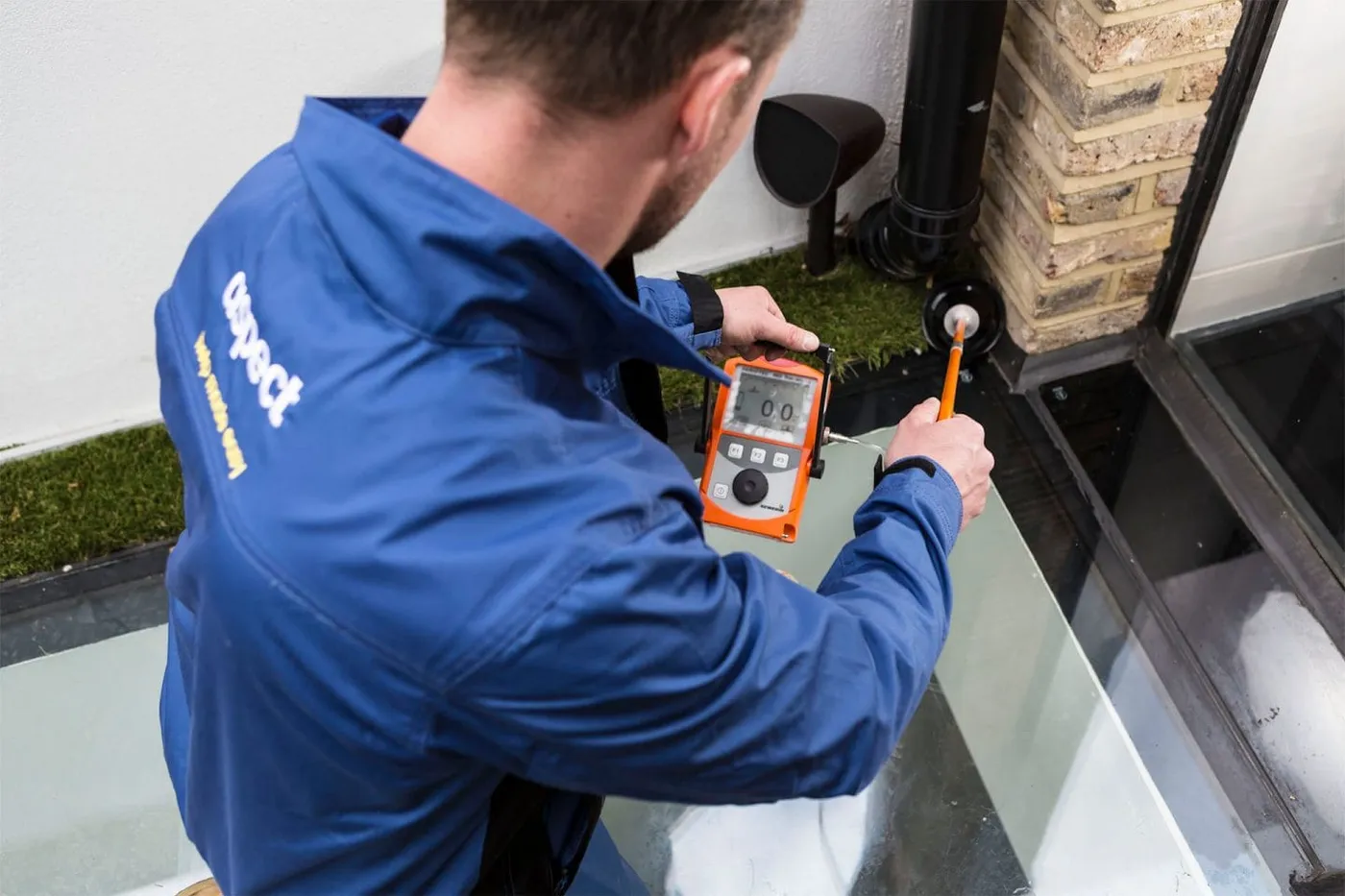
How an underfloor heating visit is priced
| Job | How it is charged | Time |
|---|---|---|
| Loops closed at the manifold and watched | You can do this yourself before calling | Minutes, and it narrows the search |
| Each loop held under test to find the failing one | Fixed detection fee, agreed at booking | Start of the visit |
| Following the failing loop through the screed | Same fee, whichever method that takes | The longest part |
| Opening a single tile or board over the marked point | Quoted once you can see where it is | Kept to one small area |
| Repair to the loop and the floor made good | Priced separately, by stage | Booked for daylight |
How each stage is charged, not a quote. The detection fee is fixed and agreed on the call, before an engineer travels.
So when the pressure gauge steadies after one loop is closed, you have just told us which circuit to look at, for free, before anyone charges you anything. It also usually means the rest of the heating can stay on. A cold house at midnight is what turns a manageable problem into an emergency, and quite often it does not have to be one.
Our engineers are on call through the night and we will happily walk you through the manifold on the phone. What we will also tell you, once the failing loop is shut and the gauge is holding, is that the urgency has passed. Tracing a pipe through screed is careful work and it is better and cheaper done in daylight.
The detection fee is fixed at booking and covers the manifold testing and the trace, whichever methods that ends up needing. Opening the floor and repairing the loop are quoted separately, after you can see exactly where the fault is and how small the opening needs to be. Anyone quoting to lift a whole floor before the leak is located is quoting for a different job.
What you get
- 24/7 emergency call-out across all London boroughs
- Fast-response teams mobilised from our London bases
- Non-invasive acoustic and thermal imaging leak detection
- Specialist equipment to pinpoint leaks under screed and floorboards
- Immediate diagnosis and detailed report on leak location and severity
- Advice on next steps for repair, whether patch repair or section replacement
How it works
A method, not a guess
01
The manifold, on the phone
We talk you through closing each loop and watching the gauge. Often this identifies the circuit before an engineer has left, and shows whether this is tonight's problem or tomorrow's.
02
Isolating and keeping warm
The failing loop stays shut and the others go back on. Most households can be kept heated overnight while the repair is arranged properly.
03
Holding each circuit under test
On site, the engineer closes and pressurises the loops individually. The one that will not hold is confirmed rather than assumed.
04
Following the run to a point
That loop is warmed and traced so the real route is mapped, not the route the original drawing claims. The fault is marked before one tile is touched.
What to do at the manifold before you book anything
Close the loops one at a time and watch the gauge
This is the single most useful thing you can do, it costs nothing, and it can be done before anyone is called. Underfloor heating runs as separate circuits from a manifold, each with its own isolation valve. Close them one by one, giving each a reasonable while, and watch the pressure. When the drop stops, the loop you just shut is the one losing water. You have now narrowed a whole-floor problem to one circuit without paying anybody, and you can leave it closed and reopen the rest.
Rule out the boiler before you accuse the floor
A sealed system that keeps losing pressure is not always leaking. A failed expansion vessel or a weeping pressure relief valve produces exactly the same falling gauge with no water escaping into the building at all. Before commissioning any detection, look at the small overflow pipe outside: if it is dripping, the valve is your likeliest culprit and no amount of surveying the floor will find anything. A visit that starts with the screed rather than the boiler is starting in the wrong place.
Treat a quote to lift the whole floor as a warning
Underfloor pipe is laid in continuous lengths with no joints buried in the screed, which means leaks happen at the manifold or at a single point where something was later driven through the pipe. Both are one place, not a system-wide failure. A firm proposing to take up the entire floor before the failing loop has even been identified is quoting for a replacement rather than a repair. Get it located first, then see how much genuinely has to come up.
Work out whether the house can stay warm overnight
Once the failing loop is closed, the rest of the circuits usually run normally, which is the difference between a cold night and an inconvenience. That matters practically and it matters financially, because a household that is warm can wait for a daytime appointment. Ask the question explicitly when you ring: can I isolate the bad loop and keep the rest of the heating on. If the answer is yes, the emergency has largely resolved itself.
Understand why daylight is genuinely better for this job
Tracing pipe through screed is slow, methodical work involving warming a circuit, imaging the route and sometimes draining the loop for tracer gas. None of it is improved by being done at two in the morning by a tired engineer in a dark house, and all of it costs more in the out-of-hours band. Once the loop is shut and the gauge holds, nothing is deteriorating. Booking properly for the morning is the cheaper and better outcome.
Ask what the fee covers when the method has to change
Screed hides things. A loop that will not give up its location to a thermal camera may need tracer gas, which means draining and refilling the circuit. That is a different amount of work and it is worth knowing in advance whether it is a different amount of money. A fixed detection fee that covers whatever the job turns out to need puts that risk on the firm. An hourly arrangement puts it squarely on you.
Compare like for like
Finding the loop without taking up the floor
Underfloor heating is laid as continuous loops in screed, with no joints buried in the floor, so a leak is almost always at the manifold or at a point where something was driven through the pipe later. That geometry is good news: because each loop closes independently at the manifold, a great deal can be narrowed down before an engineer arrives, and long before anyone talks about lifting a floor.
| What to check | A firm quoting for the whole floor | A general heating engineer | How we run the call |
|---|---|---|---|
| First move | A quote to lift the screed and replace the system. | Topping up the pressure and hoping it settles. | Close the loops at the manifold one at a time. The gauge tells you which circuit is losing before anyone pays for detection. |
| Whether you can do it yourself | Discouraged. A customer who has narrowed it down is harder to sell a floor to. | Not suggested, though usually not resisted either. | Yes, and we will talk you through it on the phone. It is the single most useful thing you can do before we arrive. |
| Heating overnight | System left off entirely, so the house is cold until the work is done. | Turned off as a precaution with no attempt to isolate. | The failing loop gets shut and the rest stay on. Most households can be kept warm while the repair is arranged. |
| How much floor comes up | All of it, presented as unavoidable. | Wherever the damp shows, which is not where the pipe was pierced. | One tile or one board over a marked point. That is the whole purpose of detecting it properly first. |
| Whether it is an emergency | Always, since it justifies moving fast on a large quote. | Rarely assessed at all. | Once the loop is closed, usually not. A booked daytime visit is cheaper and the work is better done in daylight. |
| Finding the pipe run | Guesswork, or an original drawing that stopped matching reality years ago. | Not something a general heating visit is equipped to do. | The loop is warmed and imaged so the actual route is traced, not the route the drawing claims. |
| What gets quoted | A replacement system, with detection folded invisibly into it. | Hourly, with the hours open-ended. | A fixed detection fee agreed at booking, then the repair and the floor priced separately once you can see the fault. |
From the forums
The questions that come up when a leak starts
Underfloor heating discussions follow a reliable arc: alarm at a falling pressure gauge, a quote to dig up the floor, and then somebody in the replies asking whether the manifold loops have been closed off one at a time. That question resolves a surprising proportion of them.
Replies telling a worried poster to isolate the loops first
It has become the standard opening response, and for good reason. People arrive convinced the whole floor is compromised and leave having identified a single circuit in an afternoon with nothing more than the manifold valves and a gauge. What the discussions show clearly is how rarely this is suggested by the first firm called, and how much it changes the conversation about cost when the customer already knows which loop is at fault.
Posts from people quoted for a full system replacement
A steady stream of homeowners report being told the screed has to come up and the pipework be relaid, sometimes before anyone has tested a single circuit. The replies are consistently sceptical, pointing out that continuous pipe with no buried joints does not fail everywhere at once. The usual advice is to get an independent detection visit before accepting any quote framed as replacement, because the difference between one tile and one floor is very large.
Threads where the expansion vessel turned out to be the cause
These recur often enough that regulars now ask about it before anything else. The pattern is a gauge dropping steadily, detection visits that find nothing because nothing is escaping, and eventually somebody checking the boiler's own components. The frustration in these posts is aimed less at the cost than at the sequence, since the check takes minutes and comes before the survey in any sensible order of elimination.
Discussion of what a floor actually has to have done to it
People who have been through a located repair describe a considerably smaller job than they feared, often a single tile or board lifted over a marked point and made good afterwards. Those who went in without detection describe something much worse. The contrast is the strongest argument in these discussions for paying to locate before paying to open, and it comes from the homeowners rather than from anybody selling detection.
Advice about keeping the house warm while it is sorted out
A practical thread staple: with the failing loop closed, most people find the rest of the system runs fine, and a room or two going cold is manageable for a few days. Posters with young children or elderly relatives are usually advised to confirm this before agreeing to any work that takes the system down entirely. It is also what allows people to decline an out-of-hours call-out without feeling they are taking a risk.
Symptoms
Underfloor heating leak warning signs
UFH leaks are slow, expensive and almost never visible. Catch them before screed damage spreads.
- Manifold pressure drop on one loop
- One room colder despite a working manifold
- Warm or damp patch on a solid floor
- Boiler short-cycling with UFH on
- Screed cracks or lifting tiles over a loop run
Prep for a UFH leak survey
- 1Know where the manifold is and which loops serve which rooms.
- 2Leave heating accessible. We isolate loops one by one.
- 3Clear large furniture from the coldest zone if possible.
- 4Share any as-built drawings from the original install.
Why we do not “scan the whole floor” blindly
Each loop is isolated and pressure-tested. Only the failing circuit is traced with thermal and tracer gas. That keeps access to one loop path instead of opening half the room.
Book a visitLondon housing stock
Built for how London actually leaks
Housing stock across the capital fails in different ways. We match the method to the building, not a one-size survey script.
Victorian & Edwardian terraces
Original floorboards, cast-iron stacks and decades of patch repairs. We pressure-test circuits and listen through timber before any board is lifted.
Mansion blocks & conversions
Shared risers, stacked bathrooms and flat-to-flat disputes. Origin reports settle liability between leaseholders, freeholders and block insurers.
Post-war & 1970s stock
Copper branches, cold-water tanks and ageing joints. Acoustic and thermal methods locate slow drips that never show as a flood.
New-build flats & towers
Plastic pipe, underfloor heating and boosted mains. Tracer gas and thermal imaging matter more than a listening stick alone.
Questions
UFH Leaks FAQs for London homeowners
Do I really have to take the whole floor up?
Almost never, and treat it as a warning sign if that is the first thing you are told. Underfloor pipe runs in unbroken lengths, so leaks occur at the manifold or where something was later driven through the pipe. Both are single points. Once the failing loop is identified and traced, access is usually one tile or one board over a marked spot.
What should I do the moment I notice the pressure dropping?
Go to the manifold and close the loops one at a time, giving each a while, and watch the gauge. When the drop stops, the loop you just shut is the one losing water. Leave it closed and reopen the rest. You have narrowed the job down for nothing and can keep most of the house warm while you arrange the repair.
Is a pressure drop always a leak?
No. A failed expansion vessel or a weeping pressure relief valve drops the gauge with no water escaping into the building at all, and the symptoms look identical. Check whether the small overflow pipe outside is dripping, because that points at the valve rather than your floor. Those get eliminated at the start of a visit, before anyone looks at the screed.
Should I call you out at night for this?
Usually not, and we would rather tell you that than take the booking. Once the failing loop is shut and the gauge holds, nothing is getting worse and the water is not spreading. Tracing pipe through screed is slow, careful work that benefits from daylight and a calm house. The daytime band also costs you less for the same result.
How do you find the pipe under a solid floor?
The suspect loop is run so the pipe warms, and the route is then imaged from the surface, which shows the actual layout rather than what the installer drew years ago. Where the screed hides the fault too well, tracer gas is put into the emptied loop and surfaces through the floor at the break. Both locate a point without lifting anything.
Can I find the leaking loop myself?
To a large extent, yes. Close each manifold circuit in turn, leave it a while, and watch the pressure gauge. When the drop stops, that circuit is the one losing water. It costs nothing, needs no tools beyond the valves in front of you, and identifies the problem area before you pay anybody. We will talk you through it on the phone rather than charging to do it on site.
Should I call someone out at night for a pressure drop?
Usually not. Once you have closed the failing loop and the gauge is holding, nothing is getting worse and the water has stopped going into your floor. Tracing through screed is careful daytime work and the daytime band costs less. If the floor is visibly wet, water is reaching a ceiling below or you cannot isolate the loop at all, that is different and worth calling about straight away.
Will you have to dig up my floor?
Very unlikely, and be wary of anyone who says so before locating anything. The pipe runs continuously with no buried joints, so failures are at single points: the manifold, or somewhere a fixing was driven through. Once the loop is identified and traced, access is normally one tile or one board. Detection exists precisely to keep that opening to one place.
My pressure drops but I cannot see any damp. Is it still a leak?
Not necessarily, and this is worth checking before you spend anything. A failed expansion vessel or a leaking pressure relief valve drops system pressure without a drop entering the building, which is why detection equipment finds nothing. Look at the small overflow pipe outside for a drip. If it is wet, look at the boiler before you look at the floor.
How long does an underfloor heating survey take?
Allow most of a visit. Each loop has to be isolated and held under test, which takes time by its nature, and then the failing circuit has to be warmed and traced through the floor. Where the screed defeats imaging and tracer gas is needed, the circuit must be drained and refilled as well, which lengthens things further. A rushed version of this job is an unreliable one.
Is the repair itself disruptive?
Far less than people expect, once the fault has been pinpointed. A small area of floor covering is lifted over the marked point, the damaged section of pipe is dealt with, the loop is tested and the floor is made good. The disruptive versions of this job are the ones where opening up started before anyone knew where the leak was.
Explore the cluster
Related leak detection services & guides
Leak detection London
Hub page for multi-method surveys
Acoustic detection
Listen for pressurised pipe noise
Thermal imaging
Map wet and warm anomalies
Tracer gas
Find plastic-pipe and screed leaks
Underground leaks
Supply pipe and mains traces
Trace & access
Insurer-ready reports
Pricing
Fixed fees and no find no fee
Areas we cover
All 33 London boroughs
Leak detection guide
How methods compare
Insurance claims
Escape of water explained
London-wide
UFH Leaks across all 33 boroughs
Same multi-method kit and fixed-fee approach from Barking to Richmond. Pick your borough for local housing detail.
People also book
Thermal Imaging
An infrared camera shows a wet floor in minutes rather than hours, which is why we bring one to every urgent London callout, day, night or weekend.
Learn moreTracer Gas
When a leak will not show up any other way, inert tracer gas finds it.
Learn moreHeating Leaks
Boiler pressure dropping overnight? Heating leaks are traced across London at any hour, before radiators run dry and the floor takes the damage.
Learn moreWater going somewhere it shouldn't?
Tell us the symptoms and your postcode. We'll confirm the visit, the fixed detection fee and the arrival window before you commit to anything.
Book a detection visit