Home/Services/Underground Leaks
Emergency Underground Detection
Underground Water Leak Detection London
An underground supply pipe leak is urgent in a way that catches people out. Nothing is dripping through a ceiling, so it feels like it can wait, while metered water runs away under your drive at every hour of the day and your water company's repair clock is already running.
How an underground trace is priced
| Job | How it is charged | Time |
|---|---|---|
| Meter test to prove the loss is outside | Free, and worth doing before you book | Around an hour of stillness |
| Checking whether your supplier will cover it | Free, one phone call | Before anything is commissioned |
| Tracing the run across the garden or drive | Fixed detection fee, agreed at booking | Best in daylight |
| Cross-checking a quiet plastic pipe another way | Included in the same fee | Adds time, not a visit |
| Digging down to the marked point | Quoted separately once the spot is pegged | A booked job of its own |
How each stage is charged, not a quote. The detection fee is fixed and agreed on the call, before an engineer travels.
Start with the ten minute test that costs nothing. Close your internal stopcock, use no water, and watch the meter at the boundary. Dials still turning means water is escaping between the meter and the house, which is your pipe and your bill. Dials stopped means the problem is inside and a different survey applies.
Ring your water company before you commission anything. Leaks on their side of the boundary are theirs to fix at no charge, and some offer a free investigation visit. Paying for a trace on a pipe you do not own is the most common way to waste money on this job.
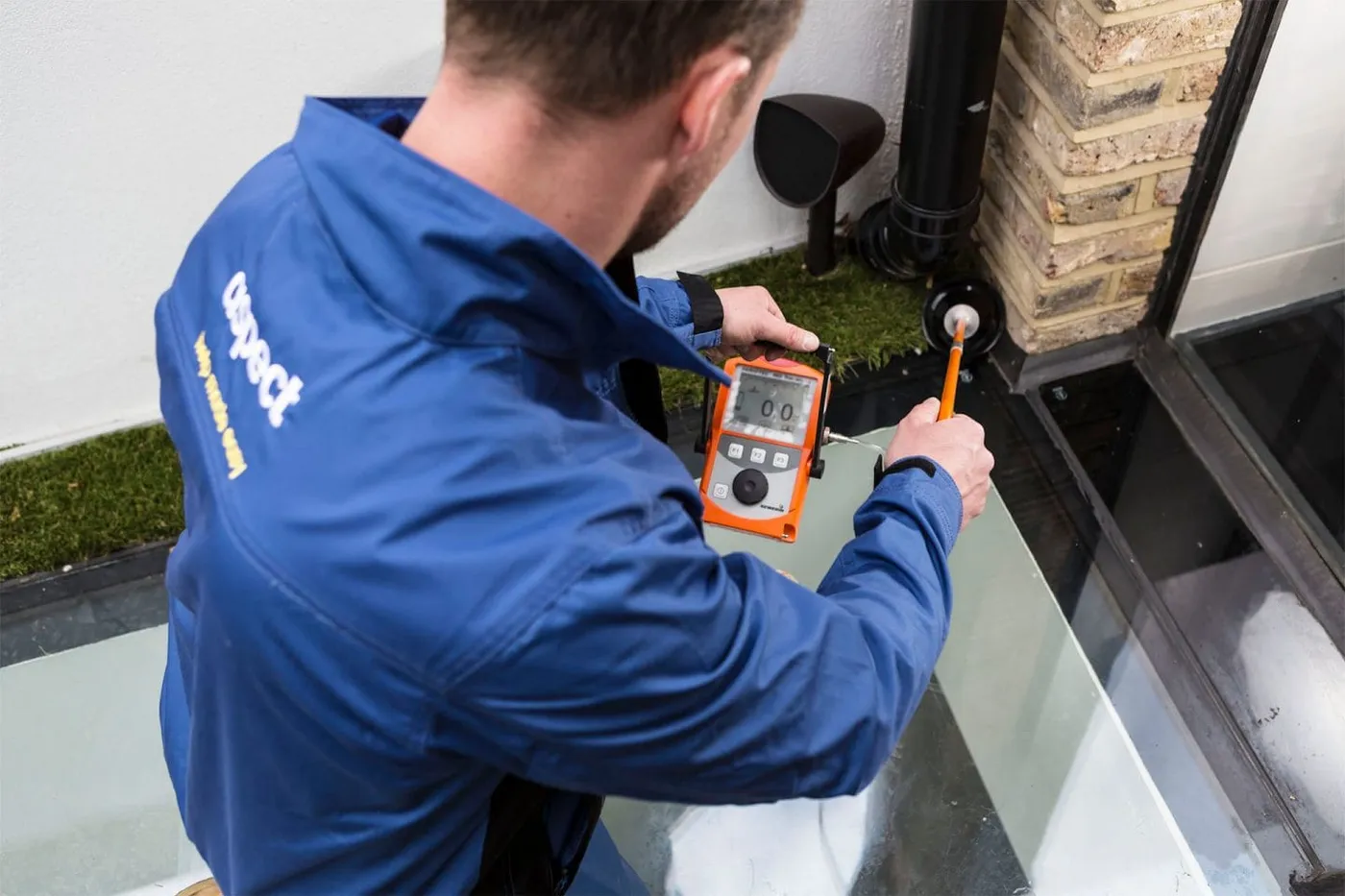
Where it is yours, we isolate and pressure test the supply to confirm the circuit, then trace it with tracer gas and acoustic correlation to a single marked dig point rather than a general area. That distinction is what decides whether you pay for one targeted excavation or several exploratory holes.
Detection runs at every hour across all 33 boroughs, though excavation is daytime work by nature. A night visit here is about confirming and isolating so the loss stops; the digging is booked for daylight.
Our pricing is based on a fixed survey fee for the detection service. You will receive a clear quote before work begins. There are no hidden charges for our emergency call-out.
What you get
- 24/7 emergency call-out across all London postcodes
- Non-invasive acoustic and thermal imaging detection to locate leaks without guesswork
- Rapid response to prevent foundation erosion and structural damage
- Specialist equipment for detecting leaks under concrete slabs, driveways, and gardens
- Immediate isolation advice to minimise water damage upon your call
- Detailed report pinpointing the leak location for targeted repair by your plumber
How it works
A method, not a guess
01
Confirm it is actually underground
The stopcock and meter test is walked through on the phone before you commit to anything, because it separates a buried supply leak from an internal one in ten minutes.
02
Establish whose pipe it is
The water company owns up to the boundary; the run from there to your house is yours. We tell you to call them first where the evidence points to their side.
03
Isolate and pressure test the run
The supply is isolated and tested so the leak is proven to be on that circuit before tracer gas or listening equipment comes out of the van.
04
One marked dig point
Tracer gas and acoustic correlation narrow the position along the pipe run to a point we mark on the ground, so the excavation that follows is targeted rather than speculative.
Six things to know before you book underground water leak detection in London
Ten free minutes tell you whether this is even your problem
Close the internal stopcock, use no water, and watch the meter at the boundary. Dials still turning with the stopcock shut means water is escaping between the meter and the house, which is the classic buried supply pipe leak and is yours to fix. Dials stopped means the loss is inside the property and an entirely different survey applies. Do this before you pay anyone for anything: it is the difference between commissioning the right job and commissioning an expensive wrong one.
Call your water company before you commission a trace
The pipe from the main to your boundary belongs to the water company and leaks on it are theirs to repair at no charge to you, pavement digging included. Several suppliers will also send someone to investigate a suspected leak on request. Booking and paying for a private trace on a pipe you do not own is the most common way to waste money on this job. Make that phone call first, note what they tell you, and only commission a survey once the leak is established as sitting on your side of the boundary.
Urgent for the bill and the ground, not for your floor tonight
Nothing is dripping through a ceiling, so people leave these for months. Two clocks are running while they do. Metered water escaping continuously adds up fast, and water companies typically expect a supply pipe leak to be repaired within roughly four weeks of notifying you before a leak allowance is affected. Saturated ground under a drive, a path or near foundations is the slower risk. Neither clock justifies a night rate, which is why this is a job to book promptly into daylight rather than to panic about at 2am.
Insist on a dig point, not a search area
The single most important question to ask is how precisely the leak will be marked. Some firms define a leak as found once narrowed to a five metre square, which can still mean several exploratory holes at your expense. A proper trace isolates and pressure tests the run to confirm the circuit, then uses tracer gas and acoustic correlation to mark a point on the ground. Get the answer before booking, because the gap between a marked point and a marked area is measured in reinstated paving.
Never let anyone dig in order to find it
Excavation is the expensive half of this job, and speculative trenching is how people end up paying for it twice. Detection happens from the surface, with the pipe isolated and tracer gas surfacing through soil, slab and paving to a detector. Digging is what happens afterwards, once, at the marked point. If a quote starts with excavation and treats location as something that will emerge along the way, that is a quote for guesswork with reinstatement costs attached.
Compare total figures, not hourly rates
Underground traces are rarely a one hour job: isolating, pressure testing, charging with tracer gas and walking a long run under a drive takes time, and an open-ended clock puts all of that risk on you. Checkatrade publishes hourly diagnostic rates of £95 to £145 and a full job spread of £80 to £1,600 with a £162 average, which shows how far apart the cheap and the complex end of this work sit. Ask for the figure for the whole survey, stated before anyone travels.
Compare like for like
Check whose pipe it is before you pay for anything
An underground supply leak is the one job where the first phone call should probably not be to us. The water company owns the pipe up to your boundary, and for a first leak on the section beyond it many suppliers will repair or contribute to the repair at no charge. A survey commissioned before that conversation can be a fee spent on a pipe that was never yours to fix.
| What to check | A firm that books before you ask | A general groundworks contractor | How we run the call |
|---|---|---|---|
| The question asked first | None. The booking is taken and the survey is scheduled. | How much of the drive you want dug up. | Have you spoken to your water company. If you have not, do that before you spend anything with us. |
| Proving there is a leak | Taken on trust from a high bill, which has plenty of other causes. | Not their role. They dig where they are pointed. | Everything off, then watch the meter. If it still turns, something outside is running. That test is free. |
| Who owns the pipe | Not raised, because the answer might cost them the job. | Not considered at all. | The boundary is the dividing line and we will help you work out which side of it you are on before committing. |
| Urgency | Presented as urgent to get the booking closed. | Whenever the plant is available. | An external supply leak is rarely a night emergency. It is losing water, not flooding your hallway, and daylight suits the work. |
| Finding it before digging | A listen at the stop tap and an approximate mark. | A trench along the assumed route, which is how drives get destroyed. | The run is traced and the point pegged. One hole over a pegged point beats a trench across the garden. |
| When the pipe is plastic | Often defeats a listen-only visit, which ends inconclusively. | Irrelevant to them, since the approach is excavation either way. | Plastic carries almost no leak noise. We move to gas or correlation rather than guessing at a quiet signal. |
| The digging itself | Recommended immediately, by them, at their price. | The entire business model. | Quoted separately once the point is pegged, so you can compare it or use your own groundworker. |
From the forums
The questions that come up when a leak starts
Look at how supply pipe leaks are discussed publicly and the same stories repeat: alarming smart-meter letters, four-figure water bills, disputed invoices and confusion over who owns the pipe. Here is what homeowners consistently report - and what it means for you.
On public discussion's water board, homeowners receiving Thames Water "you may have a leak" letters
The recurring pattern is a smart-meter letter flagging continuous flow - one poster's account showed over 4,000 litres a day against a normal 400 for a three-person household - followed by panic about the repair deadline. Experienced posters urge people to accept the water company's free investigation visit first, then act fast because the leak allowance depends on a prompt fix. One homeowner even found the leak had been repaired the day before the letter was posted. Our take: treat the letter as a deadline, not a diagnosis - verify with a stopcock test, then book a proper trace within days, not weeks.
Forum discussions on shared supply pipes in terraced London streets
Victorian terraces often run one supply pipe across six or more properties, and discussions show how messy this gets: a leak surfaces under one neighbour's extension, their plumber repairs it, and the invoice lands on someone else's doormat - sometimes alongside a formal Section 75 notice from the water company demanding repair. The consensus advice is to check the deeds, establish exactly which section of pipe failed, and never pay an invoice for a leak nobody has proven is on your section. Our take: an independent trace that maps the leak position against pipe ownership is the cheapest way to settle these disputes before they turn legal.
Money-saving public discussion discussions about leak allowances and huge metered bills
Posters report alarming six-month bills from a single underground leak, but also successful outcomes - refunds credited within a week of proving the leak was fixed. The community's rule of thumb is blunt: if you don't ask, you may not get. Fewer people know the detail that supply pipe allowances can usually be claimed more than once, while internal pipework allowances are typically a one-off. Our take: keep the detection report and repair invoice, because the allowance claim stands or falls on documented proof of what leaked, where, and when it was fixed.
Homeowners disputing plumber invoices for underground leak work
A common grievance is paying for excavation that missed the leak - one poster found the repaired spot was six feet from where the first engineer said the leak was, and others describe exploratory holes billed by the hour with nothing found. Forum regulars consistently advise getting an independent assessment before paying disputed invoices and checking the tradesperson is actually qualified for water supply work. Our take: this is precisely why detection and repair should be separated - pinpoint first at a fixed cost, then get the repair quoted against a known dig location.
Threads on whether the water company will fix the pipe for free
Plenty of posters still believe the water company must repair a leaking supply pipe, and are surprised to learn the pipe from the boundary to the house is legally theirs. Thames Water withdrew its free first-repair scheme back in 2008, and current help is limited to financial assistance schemes for eligible low-income customers - though several posters noted companies sometimes repair leaks on the public side, pavement digs included, at no charge. Our take: establish which side of the boundary the leak sits before spending anything, because if the meter shows flow with your stopcock open but the leak is upstream of the boundary, it is the water company's bill.
Symptoms
Clues your underground supply pipe is leaking
External supply leaks cost you for every lost litre and can undermine drives and foundations. Act when the meter never stops.
- Meter dial moving with every internal outlet closed
- Unusually green or soft patch on the lawn or driveway
- Sudden multi-hundred-pound water bill jump
- Hissing near the boundary box or external path
- Low pressure that improves when neighbours are off-peak
Before an underground trace
- 1Confirm the internal stopcock is fully closed during the meter test.
- 2Locate your external meter / boundary box if accessible.
- 3Note recent groundworks, new paving or tree roots along the pipe run.
- 4Contact the water company if the leak may be on their communication pipe.
Thames Water vs your pipe
The water company owns the communication pipe to the boundary; you usually own the supply pipe from the boundary in. Thames Water and others often support a first external supply-pipe leak. We help establish which side of the boundary the failure sits on before anyone digs.
Book a visitLondon housing stock
Built for how London actually leaks
Housing stock across the capital fails in different ways. We match the method to the building, not a one-size survey script.
Victorian & Edwardian terraces
Original floorboards, cast-iron stacks and decades of patch repairs. We pressure-test circuits and listen through timber before any board is lifted.
Mansion blocks & conversions
Shared risers, stacked bathrooms and flat-to-flat disputes. Origin reports settle liability between leaseholders, freeholders and block insurers.
Post-war & 1970s stock
Copper branches, cold-water tanks and ageing joints. Acoustic and thermal methods locate slow drips that never show as a flood.
New-build flats & towers
Plastic pipe, underfloor heating and boosted mains. Tracer gas and thermal imaging matter more than a listening stick alone.
Questions
Underground Leaks FAQs for London homeowners
How urgent is an underground leak really?
Urgent for your bill and eventually for the ground, rather than for your floor tonight. Metered water escaping continuously adds up quickly, and water companies typically expect a supply pipe leak to be repaired within about four weeks of notifying you before the leak allowance is affected. Saturated ground under a drive or near foundations is the slower risk.
Should I call you or the water company first?
The water company, in most cases. Leaks on their side of the boundary are repaired at no charge to you, and several suppliers will send someone to investigate before you spend anything. Once it is established that the leak sits on your side of the boundary, that is when a private trace is worth paying for.
Do you have to dig to find it?
No. The trace itself is done from the surface with tracer gas pushed through the isolated pipe and acoustic equipment following the run. Excavation only happens afterwards, at the marked point, for the repair. Anyone proposing to dig first in order to find it has the order backwards.
What should I do while I wait?
If the pipe feeding the house is the one leaking and you can manage without it, shutting the supply at the stopcock stops the loss immediately, which matters when the water is metered. Do not start digging to look for it yourself: a speculative trench in the wrong place costs more to reinstate than the survey did.
Will you attend at night for this?
We will, though we will usually tell you it is not worth the night band. Confirming, isolating and stopping the loss is the useful part and can often be done by phone in minutes. The trace and the excavation are daytime work, and booking them into the standard band is the cheaper and better outcome.
My meter shows constant flow. Is that definitely a leak?
Not always. Continuous flow readings can also come from a passing toilet valve, a dripping outside tap, a water softener regenerating or a filling loop left open. The stopcock test separates the two: if the meter keeps moving with the stopcock closed, the loss is outside the property and underground.
How urgent is an underground water leak?
Urgent in weeks rather than hours. There is no ceiling about to come down, but metered water is running away continuously and water companies generally expect a supply pipe leak to be repaired within about four weeks of notifying you for a leak allowance to apply. Ground saturation under drives, paths and near foundations is the slower concern. Book it promptly into a daytime slot rather than treating it as a night emergency.
Should I call the water company or a detection firm first?
The water company, almost always. They own the pipe up to your boundary and repair leaks on their side at no cost, and many will investigate a suspected leak before you have spent anything. Once it is clear the loss sits on your private supply pipe between the boundary and the house, that is the point at which paying for a trace makes sense.
Can you find it without digging?
Yes, that is the entire purpose of the survey. The pipe is isolated and pressure tested to confirm the circuit, then traced from the surface using tracer gas and acoustic correlation until the position along the run can be marked on the ground. Excavation happens afterwards, at that mark, for the repair. Any approach that involves digging in order to locate the leak has the sequence backwards.
What should I do while I wait for the survey?
If you can manage without the supply, shutting the stopcock stops the metered loss immediately, which is the main cost while you wait. Note your meter readings so you have evidence of the loss for any allowance claim later. Do not start digging to look for it yourself: a trench in the wrong place costs more to reinstate than the survey does, and disturbed ground makes the trace harder afterwards.
Will you come out at night for an underground leak?
We will attend in any band, but we will usually tell you not to pay for it. Nothing about a buried supply leak improves between midnight and 7am, and the useful step, shutting the stopcock to stop the loss, can be done by you in two minutes. The trace and the excavation are daylight work, so booking into the standard band is both cheaper and better.
My meter runs constantly. Is that definitely an underground leak?
Not necessarily. Continuous flow also comes from a passing toilet valve, a dripping outside tap, a water softener regenerating or a filling loop left open, all of which are inside the property and much cheaper to resolve. The stopcock test separates them in ten minutes: if the meter keeps moving with the stopcock closed, the loss is outside and underground. If it stops, start looking indoors.
Explore the cluster
Related leak detection services & guides
Leak detection London
Hub page for multi-method surveys
Acoustic detection
Listen for pressurised pipe noise
Thermal imaging
Map wet and warm anomalies
Tracer gas
Find plastic-pipe and screed leaks
Trace & access
Insurer-ready reports
Pricing
Fixed fees and no find no fee
Areas we cover
All 33 London boroughs
Leak detection guide
How methods compare
Insurance claims
Escape of water explained
London-wide
Underground Leaks across all 33 boroughs
Same multi-method kit and fixed-fee approach from Barking to Richmond. Pick your borough for local housing detail.
People also book
Water going somewhere it shouldn't?
Tell us the symptoms and your postcode. We'll confirm the visit, the fixed detection fee and the arrival window before you commit to anything.
Book a detection visit