What to Do in a Plumbing Emergency in London: The First Hour, in Order
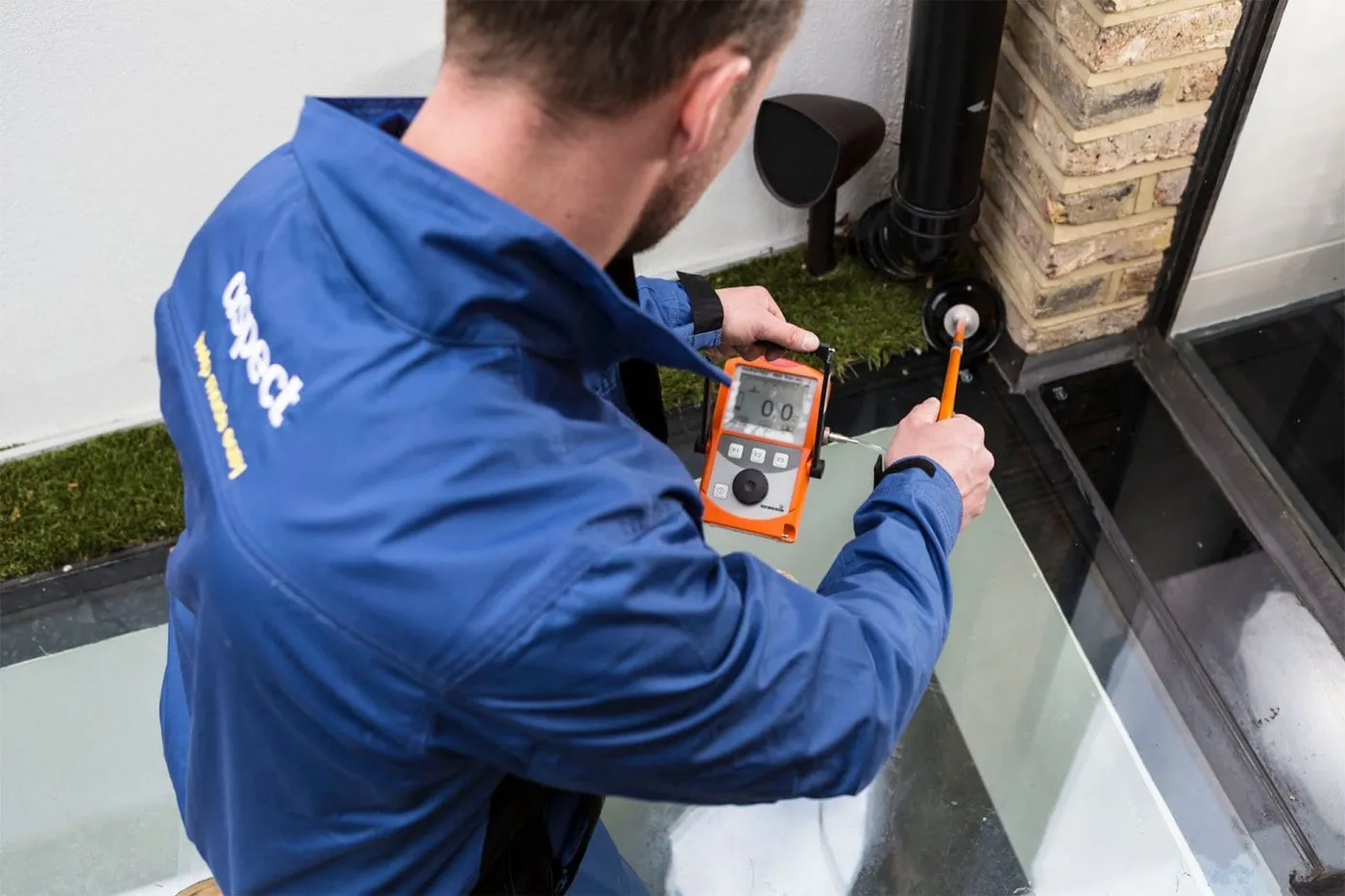
Almost every avoidable cost in a plumbing emergency comes from doing the right things in the wrong order. This is the sequence for the first hour, what changes in a London flat, and the mistakes that turn a contained incident into a claim.
The first sixty seconds
There is a correct order, and it is not the order most people follow. The instinct is to find the leak. The right move is to remove the pressure driving it, because a located leak at full mains pressure is still doing damage while you look at it, and an isolated leak is not.
Three actions, in this order. Turn the water off at the nearest valve that covers the failure. Look up and decide whether electricity is involved. Move people, and anything that matters, out from underneath. Everything else, including photographs, insurers and phone calls, comes after those three.
The three valves worth knowing before you need them
Almost every London property has more than one point of isolation, and knowing which does what saves minutes that matter.
- The internal stop tap. Shuts the cold mains to the whole property. Usually under the kitchen sink, in a hall or airing cupboard, under the stairs, or behind a bath panel. In converted flats it is sometimes in a communal riser cupboard on the landing.
- The external stop valve. A small cast iron cover in the footpath or front path, needing a key. It is the water company's asset, it may serve more than one property, and it is the fallback when the internal tap has seized.
- Service valves. Small isolating valves on individual runs, turned with a flat screwdriver, typically at the toilet, under basins, on the cylinder feed and at the boiler. These let you kill one appliance without taking the whole property off.
If the internal tap is stiff, do not fight it. A seized stop tap that snaps off in your hand turns a contained leak into an uncontrolled one, and there is a proper way to deal with a leaking or seized stopcock that does not involve a pair of pliers at midnight.
Once the mains is off, open the lowest cold tap in the property and let the system drain down. Pipework holds a considerable standing volume, and draining it is what actually stops the flow rather than merely slowing it.
Decide whether it is safe before you do anything else
Water and electricity together is the part of a plumbing emergency that hurts people, and it is the part that gets least attention because the water is more visible.
If water is running near a consumer unit, dripping from a light fitting, tracking down a wall containing sockets, or standing on a floor with cabling in it, isolate the affected circuits at the consumer unit before you go near them. If the consumer unit itself is wet, do not touch it at all: leave the property, and call an electrician or, if there is any sign of arcing or burning, the emergency services. No plumbing repair is worth that risk.
A ceiling holding water is a structural problem, not a plumbing one
A plasterboard or lath and plaster ceiling that has taken on water will bow, then sag, then come down, often as one piece. People are injured standing underneath with a bucket, which is exactly where the instinct puts them.
Clear the room below, keep everyone out, and if the ceiling is visibly bulging, treat it as unsafe until an engineer has seen it. Piercing a bulge to drain it in a controlled way is sometimes the right call, but it is a judgement about which way the water and the ceiling will go, and it needs to be made by somebody standing to the side with the electrics already off. Our guide to water leaking through a ceiling covers that assessment in detail.
Contain the water, then record everything
With the pressure off and the area safe, the next few minutes are about limiting damage and preserving evidence. Both matter, and they are easy to do at the same time.
- Get containers under any continuing drip, and lift soft furnishings, rugs and anything electrical clear of standing water.
- Open windows and get air moving. Trapped humidity is what turns a wet week into a mould problem.
- Photograph and film before you mop. Wide shots for extent, close shots for source. Once a room is dried, there is nothing left to show anybody.
- Note the time you discovered it, not the time you called someone.
- If you are metered and can safely reach the meter, read it with everything closed. A meter still turning is direct evidence that water is still escaping somewhere on your side.
- Keep anything that failed. A split length of pipe or a burst flexible hose is physical proof the failure was sudden, and it is worth more to a claim than any description.
That last point is the one people regret. The single most common reason an escape of water claim is reduced is the gradual damage exclusion, and the evidence that defeats it is usually the part that got thrown in the skip.
Who to call, and in what order
Not every plumbing emergency belongs to the same person, and calling the wrong one first is the commonest way to lose an hour.
| What is happening | First call | Why |
|---|---|---|
| Water escaping inside your own home | Emergency plumber or leak detection engineer | Yours to stop and yours to repair, then notify the insurer |
| Water bubbling up in the street or footpath | Your water company | Their main or their communication pipe, and they will attend to it |
| Wet patch on your drive or garden, meter still turning | Leak detection | Supply pipe after the boundary is the property owner's responsibility |
| Any smell of gas | National Gas Emergency Service, 0800 111 999 | Free, 24 hours. Ventilate and leave before you call |
| Water coming from the flat above | The neighbour, then the managing agent | Access to the source is the only thing that stops it |
| You rent the property | Landlord or letting agent, on their emergency number | Repairs to the water and sanitation installations are the landlord's duty |
| Sewage backing up into the property | Water company or your drainage contractor | Depends which side of the boundary the blockage sits |
| Wet ceiling with any sign of electrical involvement | Isolate the circuit, then an electrician | The hazard is electrical before it is plumbing |
If you rent, the landlord's repairing obligations for water and sanitation installations are statutory under section 11 of the Landlord and Tenant Act 1985, and they cannot be contracted away by a clause in a tenancy agreement. Report the emergency in writing as well as by phone, because the record of when you told them is what establishes liability for the damage that follows. In social housing, Awaab's Law sets specific timescales for emergency hazards, and Citizens Advice publishes clear guidance on both.
Leaks outside your boundary belong to somebody else
Ofwat sets out the split for households: the main in the road and the communication pipe up to the property boundary are the water company's, while the supply pipe from the boundary into the building is the owner's. Water surfacing in the street is a call to Thames Water, Affinity Water or whichever company serves your postcode. A wet patch on your own drive with the meter still turning is yours, and if you are metered the company's leakage allowance scheme may credit some of the water lost once the repair is done.
What a competent emergency visit actually does
An emergency attendance is not the same job as a repair booking, and the sequence a good engineer follows is deliberately front-loaded towards making the situation stable before anything gets opened up.
| Stage | What should happen | What it prevents |
|---|---|---|
| Make safe | Confirm isolation, check for electrical involvement, assess ceilings and floors | Injury, and a second incident while the first is being fixed |
| Establish the system | Identify whether it is mains, stored cold, hot, heating or waste | Chasing the wrong circuit for an hour |
| Confirm the loss | Meter check, pressure check, isolate sections and observe | Opening up a wall for a leak that is not there |
| Locate | Acoustic, thermal, moisture mapping or tracer gas as the case requires | Exploratory damage charged as investigation |
| Record | Photographs, readings and a written account of what was found and eliminated | A claim that rests on your description alone |
| Repair or make secure | Permanent repair where possible, a controlled temporary one where not | Leaving the property without a working supply |
| Hand over | What was done, what remains, and what to watch | The same engineer being called back to a different symptom |
Two things in that sequence are worth insisting on. The first is that nothing gets cut into before the loss has been confirmed and located, because a speculative hole is damage you pay for twice. The second is the written record. Most buildings policies pay for finding a leak under the trace and access section, and that payment is made against a report, not against a recollection.
Why locating comes before opening up
Water travels. It runs along joists, down the back of a stud, inside a conduit and across a screed before it appears, and the point where it shows is frequently metres from the point where it left the pipe. That is the entire reason non-invasive emergency leak detection exists: to convert a wet ceiling into a marked point, so that the single hole made is the right one.
The common emergencies and what each one needs
The symptoms differ enough that the immediate action differs too.
| Symptom | Do this first | What it usually is |
|---|---|---|
| Water spraying or pouring, visible source | Stop tap off, drain the lowest tap | Burst pipe, failed flexible hose, split fitting |
| Ceiling stain spreading while you watch | Clear the room, isolate the circuits below | A leak in the floor above, often a bath or shower waste |
| Boiler pressure falling repeatedly | Stop topping it up, note the rate of loss | Heating circuit leak, or a failed expansion vessel |
| Meter turning with every tap closed | Isolate at the stop tap and re-read | Supply pipe leak, or a passing toilet or valve |
| Warm or damp patch on a floor | Turn the heating off and keep the area clear | Underfloor heating or a buried heating flow |
| Water in a basement or lift pit | Isolate power to the area, then pump | Supply pipe, groundwater, or a failed drainage pump |
| Foul smell with slow drainage | Stop running water into the system | Blocked drain rather than a leak |
| No water at all, neighbours affected too | Check the water company's outage page before calling anyone | A mains issue, not your property |
A burst is the one case where speed genuinely changes the outcome, because the volume involved is large from the first second. The specific sequence for that case, including what to do about the electricity and the heating, is set out in what to do first with a burst pipe.
What changes in a London flat
A converted terrace or a purpose built block introduces two problems a house does not have: the water may not be yours, and the valve may not be reachable.
If water is coming from above, the only thing that stops it is somebody isolating the supply in that flat. Knock first. If there is no answer, call the managing agent or freeholder's emergency line, which is obliged to be contactable, and keep a record of the time of every call. Communal risers and the pipework within them are usually the freeholder's responsibility rather than any individual leaseholder's, and so is the block's buildings insurance. Your contents are yours.
There is also a legal boundary worth understanding before anyone starts apportioning blame. Broadly, a leaseholder is responsible for the pipework within their demise, the freeholder for common parts, and liability for damaged belongings turns on negligence rather than simply on which flat the water came from. Citizens Advice and the Leasehold Advisory Service both publish guidance on this, and it is worth reading before an argument starts rather than during one.
The practical difficulty in a block is proving where the water actually originated when two leaseholders disagree. That is an evidence problem, and it is solved with moisture mapping and a documented survey rather than with assertion. It is also the reason we write reports for managing agents and property managers in a form that stands up when it is passed to an insurer or a loss adjuster.
The things that make it worse
Most of the avoidable cost in a plumbing emergency comes from a short list of mistakes.
- Searching for the leak before isolating. Every minute spent looking is a minute of water at full pressure.
- Restoring the supply to test a repair too early. Bring the pressure up slowly and watch, rather than opening the stop tap fully and walking away.
- Cutting into a ceiling from directly underneath. Stand to the side, with the circuits off.
- Repeatedly topping up a heating system. Each top-up adds fresh oxygenated water and hides the rate of loss, which is the single most useful diagnostic you have.
- Mopping and drying before photographing. The insurer sees a tidy room and a claim with nothing behind it.
- Stripping out wet material before notifying. Mitigation is required of you. A full strip-out before the insurer has seen the scope is not mitigation.
- Assuming the damp patch is above the leak. It very often is not, and cutting where it shows is how a small repair becomes three holes.
If the water is stopped, the property is safe and nothing is actively getting worse, you have converted an emergency into a booking, and you can take the time to choose who attends rather than accepting whoever answers. If it is not stopped, that is what 24 hour emergency cover across London is for, and the call is better made early than late.
How we help with this
If the article describes a problem you actually have, these are the visits that deal with it.
- burst pipe repair
A split or burst pipe isolated and repaired, day or night.
- an emergency plumber in London
Attendance when water is running and damage is still spreading.
- our full guide to leak detection
How each method works and when it is the wrong tool for the job.
Frequently asked questions
What is the very first thing to do in a plumbing emergency?
Turn the water off at the nearest valve that covers the failure, before you try to find the leak. A located leak at full mains pressure is still doing damage while you look at it. Then check whether electricity is involved, and move people and valuables out from underneath. Photographs, phone calls and insurers all come after those three steps. Once the mains is off, open the lowest cold tap to drain the standing water out of the pipework.
I cannot find or turn my stop tap. What now?
Do not force a seized one, because a stop tap that snaps off turns a contained leak into an uncontrolled one. Look for service valves instead, the small screwdriver-operated isolators at the toilet, under basins, on the cylinder feed and at the boiler, which will take individual runs off. Failing that, the external stop valve under the small cover in the footpath will isolate the property, though it needs a key and in a shared supply it may affect a neighbour too.
Should I call my insurer before an emergency plumber?
Stop the water first, by whatever route is fastest. Your policy requires you to take reasonable steps to prevent further damage, so emergency attendance will never count against you. Notify the insurer before any permanent repair or strip-out begins, and before the failed part is discarded. Most policies run a 24 hour claims line, so you can usually get a reference the same night and let the investigation proceed with it in hand.
Water is coming from the flat above and nobody is answering. What can I do?
Isolate your own electrics in the affected area and clear the space below the ceiling. Then call the managing agent or freeholder emergency line, which is obliged to be contactable, and log the time of every call you make. Only someone inside that flat can close its stop tap, so access is the whole problem. Keep photographing, because in a block the argument afterwards is usually about where the water originated, and that is settled with evidence rather than assertion.
How do I know whether a leak is mine or the water company responsibility?
The boundary is normally the property boundary. The main in the road and the communication pipe up to the boundary belong to the water company. The supply pipe from the boundary into the property, and everything inside, belongs to the property owner. Ofwat sets out this split for households. Water surfacing in the street is a call to your water company, while a wet patch on your own drive with the meter still turning is yours to have located and repaired.
What counts as an emergency if I am renting?
Anything that makes the property unsafe or leaves it without water, heating or working sanitation generally qualifies, and repairs to the installations for supplying water and for sanitation are the landlord's statutory duty under section 11 of the Landlord and Tenant Act 1985. Report it by phone and in writing, because the record of when you told them is what establishes liability for later damage. In social housing, Awaab's Law sets specific timescales for emergency hazards.