Flooded House: What to Do First and How to Get Emergency Help
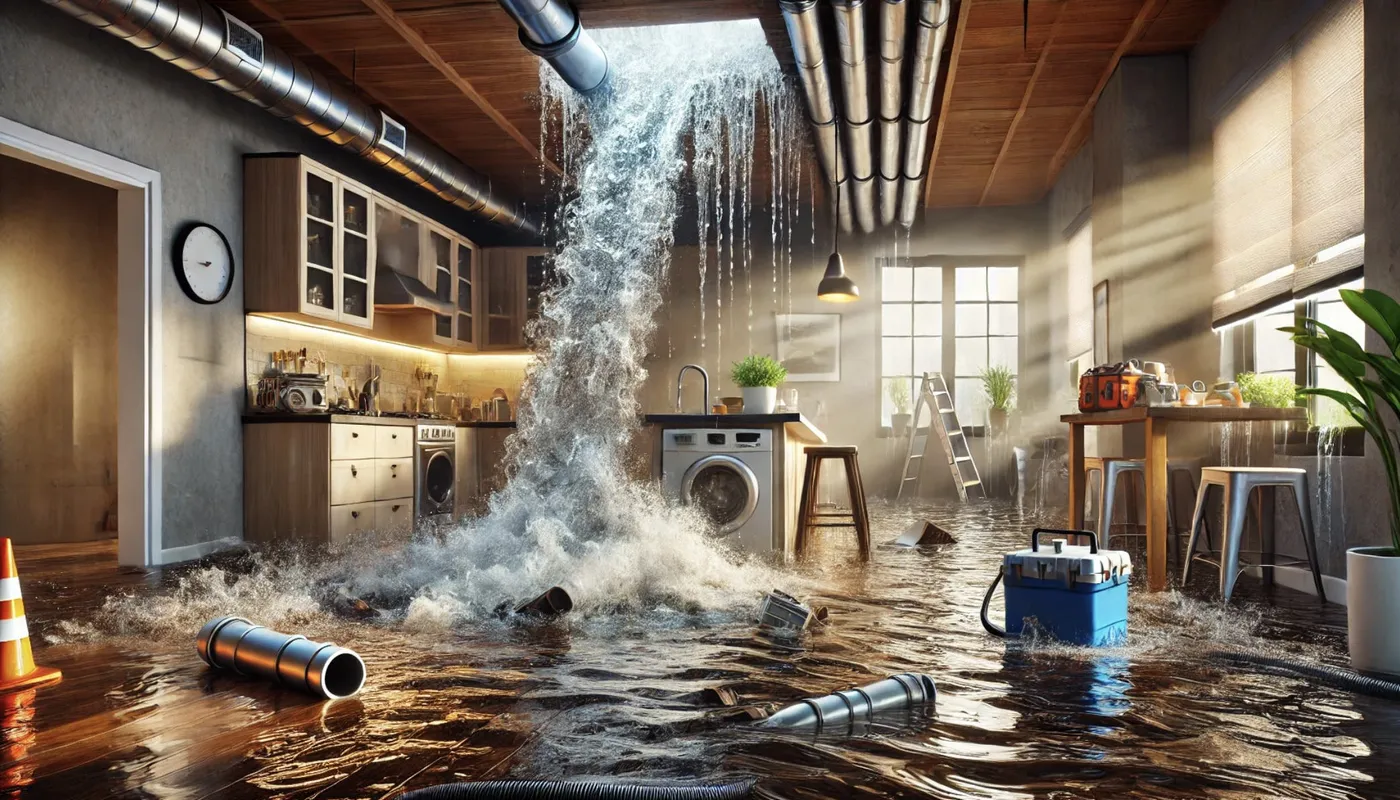
A flooded house demands immediate action. We outline the critical first steps to take and how our 24/7 emergency response team can stop the water fast.
Stop the Water at Its Source: Your First Critical Move
The moment you discover a serious leak or flood, your single most important task is to stop the flow of water. Do not waste time mopping; find the source. If it's a burst pipe, appliance failure, or a visible leak from a fitting, locate the main internal stop valve (often under the kitchen sink or in a utility cupboard) and turn it clockwise to shut off the water supply to the entire property. If the flooding is from a rising external source like a river or heavy rain, this step does not apply. Your priority shifts immediately to safety and calling for professional help.
Secure Safety and Limit Damage: The Immediate Next Steps
Electricity and water are a lethal combination. If it is safe to do so, and you can reach your consumer unit (fuse box) without stepping in water, turn off the electricity at the mains. If there is any doubt, or water is near sockets or appliances, do not risk it. Evacuate and wait for a professional. Move what furniture and valuables you can to a dry area. If the water is clean (from a supply pipe), you can start removing it with a mop and bucket, but for significant flooding or suspected sewage or greywater, avoid contact and wait for our specialists who have the correct PPE and extraction equipment.
Time is the enemy in water damage. The longer standing water remains, the more severe the structural damage and mould risk becomes. This is where our 24/7 emergency response is critical. We treat every flood call as urgent, dispatching engineers day or night. Our first goal on site is to stop the active leak if the source isn't already isolated, then we use industrial-grade extraction and drying equipment to remove water and begin the salvage process immediately, not tomorrow.
Call for Expert Leak Detection and Mitigation
Once the immediate danger is managed, you need to understand the full extent of the problem. A visible leak is often just the symptom. Using non-invasive acoustic, thermal, and tracer gas detection equipment, our engineers can pinpoint the exact location of a leak within walls or under floors without unnecessary damage. We then provide a clear, actionable report and can undertake the necessary repairs or work with your insurer's approved contractors.
Do not assume a flood is a one-off event. The underlying cause must be found and fixed to prevent recurrence. Our emergency service doesn't just patch the problem; we diagnose it. From locating a failed seal to tracing a cracked pipe under a concrete slab, our detection methods give you the answers needed for a permanent solution. Waiting until normal business hours allows damage to escalate. We operate on an urgency axis because we know that for a flooded house, every minute counts.
How we help with this
If the article describes a problem you actually have, these are the visits that deal with it.
- our full guide to leak detection
How each method works and when it is the wrong tool for the job.
- burst pipe repair
A split or burst pipe isolated and repaired, day or night.
- an emergency plumber in London
Attendance when water is running and damage is still spreading.
Frequently asked questions
Do you offer a 24/7 emergency call-out for floods?
Yes. We operate a 24-hour, 7-day-a-week emergency response service specifically for catastrophic leaks and flooding. When you call, our team is mobilised to get to you as fast as possible, any time of day or night, to stop the water and start the recovery process.
What should I do if I can't find or turn off the main stop valve?
If you cannot isolate the water, evacuate the affected area if safe and call us immediately. Our engineers carry tools to locate and operate seized valves and can install a temporary external stop tap if needed. Your safety is the priority; do not force a valve or put yourself at risk.
How quickly can you usually get to a flooding emergency in London?
We prioritise all flood calls for immediate dispatch. While traffic conditions vary, our central London base and multiple rapid-response vans allow us to reach most properties within a very short timeframe, day or night. We move on an urgency basis because we understand speed is critical to limiting damage.