Detect and Repair in One Visit: What That Actually Requires
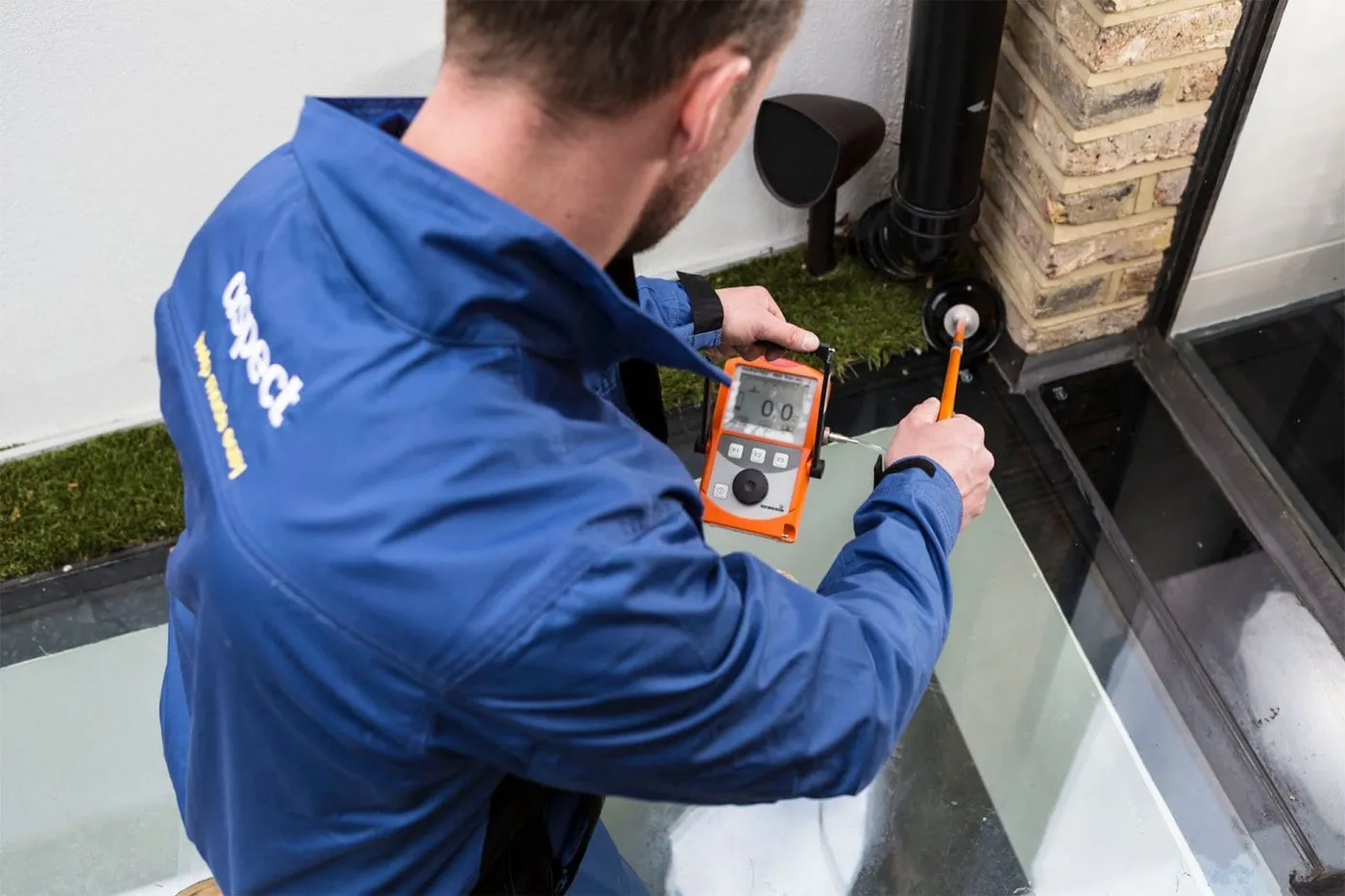
Finding a leak and fixing it on the same visit is the promise. Here is the honest version: the conditions that have to hold, the parts a van can realistically carry, and the four situations where coming back is the right call.
What has to be true for a leak to be fixed on the first visit
Four things. The leak has to be located precisely, not narrowed to a room. The water has to be isolatable at a working valve. The failed section has to be reachable without structural work. And the pipe has to be a size and material the engineer is carrying fittings for. When all four hold, detection and repair close in one visit. When one fails, the honest answer is a second visit.
Most domestic surveys in London take two to four hours. A straightforward case, one circuit failing a pressure test with a clear acoustic signal, is faster than that. An accessible pipe repair adds one to two hours on top. So a same-visit job is realistically a half-day booking, and anyone quoting you forty minutes for both halves has not done either.
The condition people underestimate is isolation. A seized stopcock is the single most common reason a repair that could have been done today is not. If the internal stop valve will not turn, the supply has to be shut at the external boundary box, which needs the right key, a working outside stop valve, and sometimes the water company. That is a job in itself before a spanner touches the leak.
What the van carries, and what nobody carries
We carry pipe and fittings so that most domestic repairs finish on the same visit. In practice that means copper in 15mm and 22mm, barrier and push-fit plastic in 10, 15 and 22mm, MDPE in 20, 25 and 32mm for supply pipe, compression and press fittings, isolation valves, inhibitor, and the consumables to make a joint on a pipe that will not fully drain.
What is not on the van is the awkward end of London's housing stock. Imperial copper in half-inch and three-quarter-inch, common in properties plumbed before the mid-1970s, does not take a metric compression olive reliably. There are adaptors, but you need the right one and it is not a generic stock item. Chrome-plated copper is worse: the plating stops a compression olive biting, and the correct answer is to cut back to bare copper, which is only possible if there is bare copper to cut back to. Lead and galvanised steel both mean a transition fitting and a decision about whether repairing a section of a failing material is sensible at all.
Underfloor heating pipe is the other one. Repairing PE-RT or PEX buried in screed usually means a manufacturer-specific repair coupler, because the wrong coupler is what voids the loop warranty. Getting the right one is a supplier call, not a van drawer.
A detail that decides more same-visit repairs than any parts list: you cannot solder a wet pipe. Water in the bore wicks heat away faster than a torch can put it in, and the joint never reaches temperature. Press fittings work on a damp pipe where solder will not, which is why a press tool on the van is worth more than another box of end-feed fittings.
Heating leaks take longer than cold-water leaks, and here is why
A cold-water repair is isolate, cut, joint, restore. A heating repair is isolate, drain the affected circuit, cut, joint, refill, re-dose the inhibitor, bleed every radiator, re-pressurise and then watch the gauge. The joint is the quick part.
The inhibitor step is not optional housekeeping. BS 7593 treats system water loss as the trigger for re-dosing, because the corrosion inhibitor leaves with the water and an unprotected system starts making the magnetite that causes the next problem. A firm that refills a heating system after a repair and does not re-dose has saved twenty minutes and handed you a slow-burning fault.
Thermal imaging is also the reason a heating leak is often located faster than a cold one. A hot pipe leaking under a floor makes a temperature difference a camera can read directly. A cold-water leak under the same floor makes almost none, and has to be found acoustically or with tracer gas. Ours is five per cent hydrogen in nitrogen, which is safe and non-flammable, and which takes time to surface through screed. Detection method drives duration far more than the size of the leak does.
Access: floors, walls, and the decisions you have to make on the spot
Once the leak is located, the question becomes what has to be opened to reach it, and that is a decision made with you standing there, not one to be assumed in advance.
Floorboards over an accessible void are the easy case. Engineered or solid timber laid over the top is not. It is glued or secret-nailed, it does not lift, and a board taken up is a board that will be visible afterwards. Tiled floors on a bed and screed have to be broken, and a matching replacement tile usually does not exist. Screeded floors with underfloor heating in them cannot be chased blind at all; the loop layout has to be established first or you create a second leak fixing the first.
Joists are a hard boundary. There are limits in the building regulations on where a joist may be notched or drilled: broadly, notches only in the outer quarters of the span and shallow, holes on the neutral axis and small. A pipe run that sits outside those zones cannot simply be freed by cutting more timber. Cutting a joist to reach a pipe at eleven at night is how a leak becomes a structural repair.
In a flat, the ceiling below the leak is very often part of somebody else's demise. Opening it needs the downstairs leaseholder's permission, and in many blocks the managing agent's too. That is not a technicality we can waive for speed. It is the neighbour's property.
When we stop and come back, and why that is the right call
There are four situations where continuing would be worse than returning, and being explicit about them is the only thing that makes a same-visit promise worth anything.
Suspected asbestos. In a building predating 2000, textured ceiling coatings, insulating board and older floor products may contain asbestos. Disturbing them is controlled work under the Control of Asbestos Regulations 2012, and some of it is licensable. The correct action is to stop, leave the material undisturbed and arrange the right survey. No leak justifies opening an unknown textured ceiling with a bolster.
Water in the electrics. If water has tracked into a ceiling rose, a downlighter, a socket or a consumer unit, the circuit gets isolated and stays isolated until it has been inspected and tested. Drying a fitting out and switching it back on because the tenant wants the lights is not a judgement call anyone should be making on your behalf.
Structural involvement. A pipe that can only be reached by cutting a joist, removing a section of a load-bearing wall, or lifting a structural screed is no longer a plumbing job. It needs a scope, and often someone else's sign-off.
Wrong material, wrong size. Imperial copper, chrome, lead, galvanised steel, or a proprietary underfloor heating loop. A bodged adaptor on a supply pipe fails later, usually under a floor that has just been closed up. Ordering the right part costs a day. The bodge costs the whole floor again.
In all four cases the water is made safe before we leave (isolated at the nearest working valve, with the leak contained) and the return visit is booked with the parts or the trade it actually needs. Repairs are quoted separately before any work starts, so a stop decision never turns into a surprise on an invoice.
Making good afterwards: who reinstates, and what that costs
Reinstatement is the part of a same-visit repair that most often gets glossed over, and it is worth being clear about where the line sits. A plumbing repair leaves you with a sound pipe and an open floor, ceiling or wall. Getting that back to a finished surface is a separate scope with separate trades: plasterer, tiler, floor layer, decorator.
Insurance draws the line in a specific place. A trace and access extension on a buildings policy is there to pay for finding the leak and for the damage caused by getting to it: opening up and putting back. It does not normally pay for the failed pipe itself, and redecoration usually falls under a different part of the policy with its own limit. That is why the detection report matters as much as the repair: a document that separates detection, repair and reinstatement into distinct line items is one a loss adjuster can process. A single line reading "attended, fixed leak" is one they will query.
Practically, that means three things worth doing on the day. Photograph the opened-up area before anything is closed. Keep the invoice split by activity. And if the property is insured and the damage is more than cosmetic, notify the insurer before instructing reinstatement rather than after, because costs incurred before notification are the ones most often disputed.
What to ask before you book anyone for a same-visit repair
Three questions separate a firm that can do this from a firm that says it can. Ask what pipe sizes and materials are carried on the van, and listen for whether imperial copper and chrome get a straight answer. Ask whether the price quoted covers detection only, or detection and repair, and how the second half is priced. And ask what happens if the leak turns out to be under a screeded floor. The answer tells you immediately whether you are talking to someone who has done it.
A leak located to a repairable point in a single visit is a realistic standard, and it is the one we work to. A leak located, repaired and made good in a single visit, in a Victorian conversion with a screeded bathroom floor and a neighbour downstairs, is not, and nobody should be promising it to you.
How we help with this
If the article describes a problem you actually have, these are the visits that deal with it.
- our full guide to leak detection
How each method works and when it is the wrong tool for the job.
- leak detection in London
Finding a hidden leak without opening the property up first.
- water leak repair
Once the leak is found, the repair on the same visit where we can.
Frequently asked questions
Can you really find and fix a leak in one visit?
In most domestic cases, yes. It requires four things to hold: the leak is located precisely rather than narrowed to a room, the water can be isolated at a working valve, the failed section is reachable without structural work, and the pipe is a size and material we carry fittings for. Detection typically takes two to four hours and an accessible repair one to two more, so it is a half-day job rather than a quick call.
What stops a leak being repaired on the same visit?
Four things, most commonly. A seized stopcock that prevents isolation. Suspected asbestos in a textured ceiling coating or insulating board, which is controlled work under the Control of Asbestos Regulations 2012. Water that has tracked into electrical accessories, where the circuit stays isolated until inspected. And unusual pipe materials such as imperial copper, chrome-plated copper, lead or a proprietary underfloor heating loop that needs a manufacturer-specific coupler.
Why does a central heating leak take longer to repair than a cold water leak?
Because the joint is the short part. A heating repair means draining the affected circuit, making the joint, refilling, re-dosing the corrosion inhibitor, bleeding every radiator and re-pressurising. BS 7593 treats system water loss as the trigger for re-dosing, and skipping it leaves the system unprotected against the corrosion that produces magnetite sludge.
Who pays for putting the floor or ceiling back after a leak repair?
Reinstatement is a separate scope from the plumbing repair. Where a buildings policy includes a trace and access extension, it is generally intended to cover finding the leak and the damage caused by opening up and putting back, but not the failed pipe itself, and redecoration usually sits under a different section with its own limit. Photograph the opened-up area, keep the invoice split by activity, and notify the insurer before instructing reinstatement.
Can you repair a leak under a screeded floor with underfloor heating?
Usually yes, but rarely on the first visit. The loop layout has to be established before the screed is chased, or you risk creating a second leak while reaching the first, and the repair generally needs a manufacturer-specific coupler rather than a generic fitting. The loop then has to be refilled, pressure-tested and the screed allowed to cure before the floor finish goes back.