Low Water Pressure in the House: Causes and What to Check First
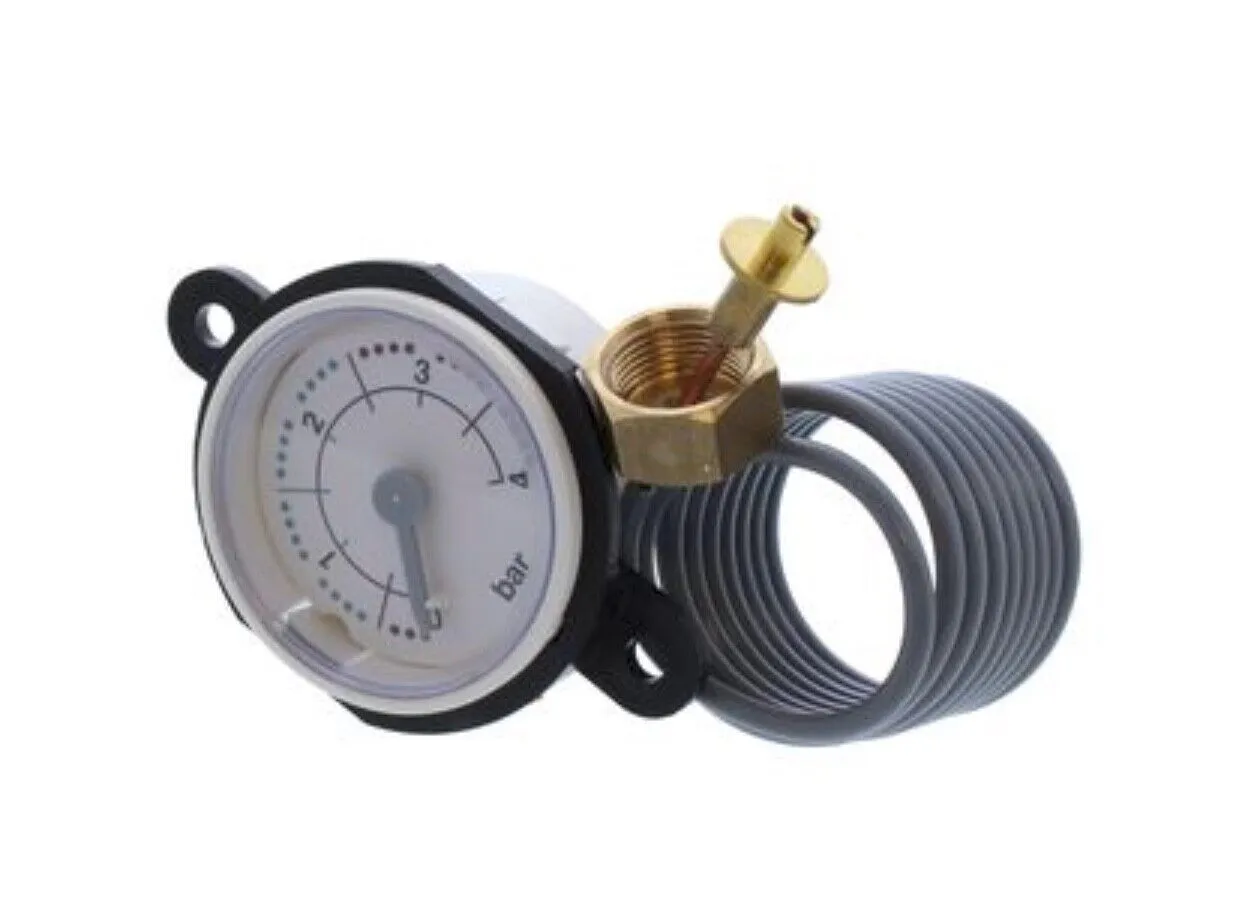
Most people describing low pressure are actually describing poor flow, and the two have different causes and different fixes. Here is how to split the problem, what your water company is obliged to deliver, and when weak pressure genuinely indicates a leak.
Pressure and flow are not the same problem
Almost every complaint about low water pressure is really a complaint about poor flow, and confusing the two sends people looking in the wrong place. Pressure is force, measured in bar, and it is what pushes water along. Flow is volume over time, measured in litres per minute, and it is what actually fills a bath. A system can have perfectly adequate pressure and dreadful flow, and that combination is by far the most common presentation.
The distinction matters because the causes separate cleanly. Genuinely low pressure usually originates upstream: the network, the supply pipe, or a pressure reducing device. Poor flow with normal pressure is usually a restriction: a partly closed valve, a blocked aerator, scale narrowing a bore, or a pipe that is simply too small for what is being asked of it.
| Symptom | Points at | First check |
|---|---|---|
| Weak everywhere, all the time | Pressure, upstream of the property or at the incoming main | The stopcock, the supply pipe and neighbouring properties |
| Weak at one tap only | Flow restriction local to that outlet | The aerator, the service valve and the flexible tail |
| Weak upstairs, fine downstairs | Insufficient head or pressure to lift water | Storage tank level, or whether the incoming pressure is marginal |
| Weak only when two things run at once | Flow capacity rather than pressure | Pipe sizing and the incoming supply pipe bore |
| Weak only at certain times of day | Network demand or a shared supply | Whether neighbours see the same pattern |
| Was fine, suddenly dropped | A change: a valve, a failed component, or a leak | The meter, and anything worked on recently |
The first split: whole house or one outlet
Before anything else, establish the scope, because it halves the problem immediately and costs nothing.
Run the cold tap at the kitchen sink, which on most properties is fed directly from the incoming main and is therefore the closest thing to a test point you have. If that tap is strong and everything else is weak, the incoming supply is fine and the problem is inside the property's distribution. If the kitchen cold is weak too, the problem is at or before the point where water enters the building.
Which system do you actually have?
The answer changes what a normal reading even looks like.
- Mains fed, direct. A combination boiler or an unvented cylinder takes mains pressure straight to the outlets. Pressure at the tap is roughly the pressure at the main, less losses along the way.
- Gravity fed from a storage cistern. An older system with a tank in the loft supplies hot water and often upstairs cold by gravity. Pressure here comes from height alone, at roughly 0.1 bar per metre of fall, so a bathroom close to the tank will always be weak. That is the design, not a fault.
- Pumped. A shower pump or a whole house booster is fitted to overcome the above. When it fails, the symptom is a sudden collapse in performance at the outlets it served.
Complaining that an upstairs shower is weak on a gravity system is often complaining about physics. The fix there is a pump or a change of system, not a search for a fault.
Causes inside the property
Most low pressure calls resolve on this side of the boundary, and several of the causes are trivial once identified.
| Cause | How it presents | How it is confirmed |
|---|---|---|
| Partly closed stop tap | Weak everywhere, often after recent plumbing work | Open it fully and re-test. The commonest cause by a distance |
| Seized or failing stop tap | Weak everywhere, tap stiff or will not move | It should turn freely. One that does not is a fault in itself |
| Blocked aerator or shower head | One outlet only, gradually worsening | Remove and inspect. London water leaves heavy scale deposits |
| Scale in pipework or a heat exchanger | Hot side much worse than cold, worsening over years | Compare hot and cold flow at the same outlet |
| Failed pressure reducing valve | Sudden, whole house, often after years of service | Pressure readings either side of the valve |
| Blocked filter or strainer | Whole house or one system, gradual | Inspect strainers at an unvented cylinder, a filter housing or a boiler inlet |
| Storage cistern level low | Gravity outlets only, sometimes intermittent | Look in the tank. A failing float valve is the usual reason |
| Old supply pipe with a reduced bore | Poor flow, adequate pressure, worse with multiple outlets | Identify the material and size where it enters the building |
Two of those deserve emphasis. The partly closed stopcock is genuinely the most common finding, and it is worth ruling out before anything else, which is easier if you know where yours is and what it should feel like. Finding and using the stop tap covers that, and a tap that is stiff or weeping should not be forced, as set out in dealing with a seized stopcock.
The other is scale. London sits in a hard water area, and years of deposits progressively narrow pipe bores, block aerators and clog heat exchangers. The classic signature is a hot side that has become far worse than the cold side at the same outlet, because scale precipitates preferentially where water is heated. That progression and what can be done about it is covered in hard water and limescale in London homes.
The pressure reducing valve, and how it fails
Many properties, particularly newer ones and anything with an unvented cylinder, have a pressure reducing valve on the incoming main. Its job is to hold downstream pressure at a set value regardless of what the network is doing, which protects appliances and reduces the stress on joints. It is a mechanical device with a diaphragm and a spring, and it wears.
When it fails it usually fails closed rather than open, throttling the whole property to a trickle. The presentation is distinctive: a sudden whole house drop, unaffected by anything you do at the outlets, on a system that was fine the previous day. It is confirmed by taking pressure readings on each side of the valve, and a large difference across it with nothing running is the answer. It is worth knowing that these valves are frequently combined with a strainer in the same body, so a blocked strainer produces an almost identical symptom and is far easier to put right.
The network side, and the standard you are owed
If the kitchen cold tap is weak and your neighbours have the same problem, the issue is upstream and it is not yours to fix.
Water companies in England and Wales operate under the Guaranteed Standards Scheme, which requires them to maintain a minimum pressure of seven metres static head in the communication pipe serving the premises, usually measured at the outside stop valve. Seven metres of head is roughly 0.7 bar. That is a minimum rather than a target, and several companies publish their own higher aims, so it is worth reading your supplier's own published standard rather than assuming the regulatory floor is what you should expect.
If pressure at the boundary falls below that standard, the supplier should investigate, and the scheme provides for compensation where the standard is breached. What it will not do is help with anything downstream of the boundary stop tap, because that pipe and everything after it belongs to the property. Establishing which side of that line the problem sits on is therefore the single most valuable thing you can determine, and it is also what decides who pays.
Things that look like a network fault and are not
Three situations are routinely misattributed. A shared supply pipe, still common in older London terraces, means several properties draw through one pipe, so peak demand next door reduces yours in a way that looks exactly like a network problem. Temporary works or a repair upstream can drop pressure for hours or days, usually with notice that gets missed. And a property at the top of a hill or the top of a tall building will always see lower pressure than one at the bottom of the same main, which is geography rather than fault.
Sudden drops and gradual ones are different investigations
The timeline is one of the most useful pieces of information you can offer, because it points at entirely different categories of cause.
A sudden drop means something changed, and the search is for that change: a valve moved, a component failed, a new leak opened, or works started upstream. The most productive question is what happened in the days before, and recent plumbing work of any kind is the first thing to ask about, because a service valve or a stopcock left partly closed after a repair accounts for a great many of these.
A gradual decline over years means accumulation, and in London that usually means scale, corrosion products narrowing an old galvanised or lead supply pipe, or a filter nobody has changed. Nothing failed. The system has simply been getting slowly worse, and the fix is replacement or cleaning rather than fault finding. Knowing which of the two you have before anyone attends saves a wasted hour, and the relevance of the pipe material itself is covered in old pipes in London homes.
When low pressure genuinely means a leak
A leak reduces pressure only when it is large enough or positioned where it matters, so the connection is real but weaker than people assume. The case that matters is a leak on the supply pipe between the boundary and the building, because every drop lost there is lost before it reaches any outlet, and the effect is whole house and permanent.
That situation has a recognisable combination of signs, and no one of them is sufficient alone.
- Whole house weakness including the kitchen cold tap, with neighbours unaffected.
- A meter that keeps moving with every tap, appliance and toilet in the property idle.
- No damp anywhere indoors, because an underground leak disperses into the soil rather than into the building.
- A bill that has risen without any change in how the household uses water.
- Sometimes a visible clue outside: a patch of ground that stays wet, grass that is greener along a line, or a boundary chamber that is always full.
Where several of those are present together, the meter test is the confirming step and it should come before anyone is asked to dig. Our guide to reading your water meter to check for a leak covers how to run it, including the trick of closing the internal stop tap and re-reading to establish whether the loss is inside the building or on the supply pipe outside it. Who owns the failed section is a separate question with real financial consequences, and it is set out in who is responsible for an underground supply pipe leak.
What a pressure reading cannot establish
A gauge on a tap is useful and frequently over-interpreted, so it is worth being precise about what a number does and does not mean.
| Measurement | What it tells you | What it cannot tell you |
|---|---|---|
| Static pressure, nothing running | The pressure available when the system is at rest | Anything about flow. A badly restricted pipe still shows full static pressure |
| Dynamic pressure, with an outlet open | How far pressure drops under load, which does reveal restrictions | Where the restriction is. The drop is cumulative along the whole route |
| Flow rate at one tap | What that outlet delivers | Whether the limit is the tap, the branch, the incoming pipe or the main |
| A reading taken indoors | What the property receives after all internal losses | What the network delivered. Only a boundary reading separates the two |
| A single reading at one moment | Conditions at that moment | Any pattern. Network pressure varies through the day and across the week |
The fourth row is the one that settles arguments. A weak reading inside the house proves nothing about whose problem it is, because every restriction between the boundary and the tap has already had its effect. The measurement that decides the question is taken at the outside stop valve, and that is the reading a water company will want if a Guaranteed Standards claim is going to go anywhere.
The fifth is the one that wastes visits. Pressure varies with network demand, so a single spot reading during a quiet period can look entirely healthy on a supply that collapses every weekday morning. Where the complaint is intermittent, logging over days is the only approach that produces evidence, and a spot check is close to worthless.
What to check, in order
Working through this sequence resolves a large share of cases without anybody attending, and it makes the remainder much faster to diagnose.
- Test the kitchen cold tap to establish whether this is whole house or local.
- Confirm the stop tap is fully open, both the internal one and, where accessible, the external boundary valve.
- Ask a neighbour. If they have the same problem at the same times, it is upstream and it should be reported to the supplier rather than to a plumber.
- Remove and clean the aerator on any single weak tap before concluding anything about the system.
- Compare hot against cold at the same outlet. A much worse hot side points at scale or at a cylinder rather than at the supply.
- Run the meter test if the weakness is whole house and nothing above explains it.
- Check what changed. Recent plumbing work, a new filter, a water softener, or a valve left partly closed accounts for a surprising number of sudden drops.
Where that leaves an unexplained whole house loss with a moving meter, the next step is locating it rather than guessing, and what drives the cost of that is whether the run is below ground, how accessible it is, and which detection methods the pipe material requires. We confirm what is being charged before anyone travels, and detection is quoted separately from any repair that follows it.
How we help with this
If the article describes a problem you actually have, these are the visits that deal with it.
- our full guide to leak detection
How each method works and when it is the wrong tool for the job.
- leak detection in London
Finding a hidden leak without opening the property up first.
- acoustic leak detection
Ground microphones and correlators on a pressurised pipe.
Frequently asked questions
What is the difference between water pressure and flow rate?
Pressure is force, measured in bar, and it is what pushes water along. Flow is volume over time, measured in litres per minute, and it is what fills a bath. A system can have perfectly adequate pressure and poor flow, which is the most common presentation by far. The distinction matters because the causes differ: genuinely low pressure usually originates upstream at the network or the supply pipe, while poor flow is usually a restriction such as scale, a partly closed valve or an undersized pipe.
What is the minimum water pressure my supplier has to provide?
Under the Guaranteed Standards Scheme, water companies in England and Wales must maintain a minimum of seven metres static head in the communication pipe serving the premises, usually measured at the outside stop valve. Seven metres of head is roughly 0.7 bar. That is a regulatory floor rather than a target, and some companies publish higher aims of their own, so check your supplier's own standard. The scheme provides for compensation where the standard is breached.
Why is my water pressure suddenly low everywhere?
A sudden whole house drop means something changed. In rough order of likelihood: a stop tap left partly closed after recent work, a failed pressure reducing valve, a blocked strainer or filter, a new leak on the supply pipe between the boundary and the house, or works on the network. Check the kitchen cold tap first to confirm it really is whole house, then verify the stopcock is fully open, then ask a neighbour whether they have the same problem.
Does low water pressure mean I have a leak?
Only sometimes, and it needs corroboration. A leak has to be large or badly positioned to reduce pressure noticeably, and the case that matters is a leak on the supply pipe before it reaches the building, because everything lost there never reaches an outlet. Look for the combination: whole house weakness, a meter that moves with everything off, no damp indoors, a risen bill, and sometimes a patch of ground outside that stays wet. One sign alone is not enough.
Why is my upstairs shower weak but the kitchen tap strong?
Most often because they are fed differently. The kitchen cold is usually taken straight off the incoming main, while upstairs outlets on an older system are fed by gravity from a storage cistern in the loft. Gravity pressure comes from height alone, at roughly 0.1 bar per metre of fall, so a bathroom close below the tank will always be weak. That is the design rather than a fault, and the remedy is a pump or a change of system.
Can limescale cause low water pressure?
It causes poor flow rather than low pressure, which in practice feels the same at the tap. London sits in a hard water area, and deposits build up progressively in aerators, shower heads, pipe bores and heat exchangers. The giveaway is that the hot side becomes much worse than the cold side at the same outlet, because scale precipitates preferentially where water is heated. Start by removing and cleaning the aerator, which is free and frequently solves a single weak tap.